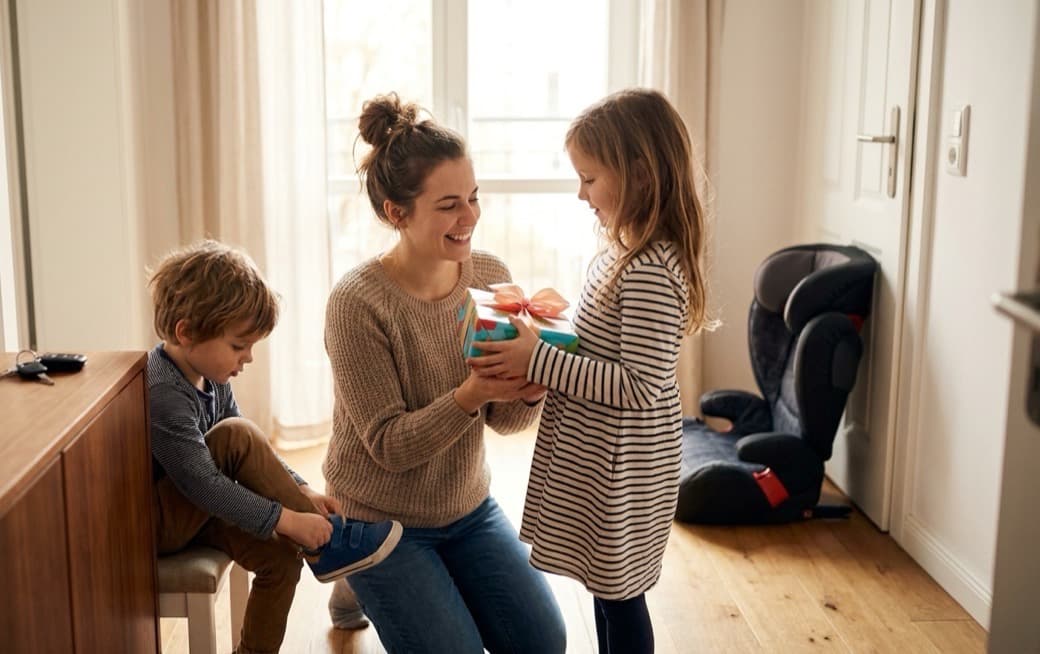
Emma had done everything right — or so she thought. Her au pair Lucía had been with the family for five weeks, knew the school run by heart and handled the afternoons with the kind of calm Emma could only dream of. So when the school year started and the invitations began to arrive, Emma simply said: "You're with the kids most afternoons. Just sort out the playdates and parties as they come up."
Three weeks later, it all landed on the same Saturday. Lucía had said yes to a birthday party for seven-year-old Mia at two o'clock, forgetting that Mia had a swimming lesson at half past one. The gift she bought cost more than Emma would ever spend on a classmate. And at pickup, the birthday boy's mother asked whether Lucía could drop her son's best friend home too, since it was on the way. Lucía, wanting to be helpful, said yes. The friend rode home in the back of Emma's car without a booster seat, with the family of a child Emma had never met.
Nothing bad happened. But that evening Emma realised she had no idea which parents her au pair was in touch with, which invitations were still open, or what Lucía thought she was allowed to decide on her own.
Lucía hadn't been careless. She had been handed a whole calendar with no rules attached. This guide is about the rules: who RSVPs, which adults can collect your child, what the gift budget is, when your au pair can drive other people's children, and how all of it stays in one shared place instead of three group chats.

Schedules, tasks and costs with your au pair, in one app.

Why the Kids' Social Calendar Is a Hidden Workload
Most families plan the fixed parts of an au pair's week carefully: school hours, pickups, the regular activities. The social calendar is different. It arrives in bits, through backpacks, group chats and conversations at the school gate, and it usually lands on whoever is standing there at three o'clock. More and more often, that's your au pair.
Three streams, three kinds of decisions
The kids' social life comes in three distinct streams, and each one needs a different kind of rule:
- Invitations: Birthday parties, class events, sleepovers. They need a yes or no, a date in the calendar and often a gift.
- Playdates: Arranged between parents, often at short notice. They involve other families' homes, other adults and your child out of your sight.
- Carpools and lifts: Swapping drives with other parents. They involve your car, your insurance and other people's children.
The recurring weekday logistics are a separate job. If you haven't set those up yet, start with our guide to after-school pickups and activities. This post covers the ad-hoc layer on top: everything that comes in as an invitation rather than a timetable.
Key takeaway: The social calendar isn't one task. It's three streams, and invitations, playdates and carpools each need their own rule.
Who Decides What: RSVPs, Yeses and Vetoes
Handing over the kids' social calendar doesn't mean handing over every decision. It means being clear about which decisions your au pair can make alone, which ones they prepare for you, and which ones stay with the parents.
A simple three-level split
Sit down with your au pair and sort the typical decisions into three levels:
| Decision | Au pair decides | Au pair proposes, parent confirms | Parents only |
|---|---|---|---|
| Playdate at your home, during working hours | ✓ | ||
| Playdate at a family you already know | ✓ | ||
| Playdate at a family you've never met | ✓ | ||
| Birthday party RSVP | ✓ | ||
| Buying a gift within the agreed budget | ✓ | ||
| Driving another family's child | ✓ (set up once, in advance) | ||
| Sleepovers | ✓ | ||
| Anything that clashes with a fixed activity | ✓ |
Your table will look different, and that's fine. What matters is that it exists, and that your au pair doesn't have to guess.
An RSVP rule your au pair can actually follow
"Ask me first" sounds safe, but it quickly turns into a bottleneck when you're in meetings all day. A better rule has a clear trigger and a clear deadline:
- Invitation arrives: Your au pair puts it on the shared calendar as "pending" the same day
- Check the week: They look for clashes with activities, family plans and their own time off
- Propose: They send you one message: "Party for Mia on Saturday 2 pm, no clash, gift within budget. OK to say yes?"
- Confirm by a deadline: You answer within 24 hours, or you agree that no answer means yes for parties at known families
- Reply to the host: Your au pair RSVPs and turns the pending entry into a confirmed one
This keeps the decision with you while taking the legwork off your plate.
Key takeaway: Decide once which calls your au pair can make alone. A clear split beats "ask me first" on every single invitation.
Birthday Parties: From Invitation to Gift to Pickup
Birthday parties are the most frequent item on a young child's social calendar, and they come with more moving parts than they seem to: a date, a gift, sometimes a theme, a drop-off and a pickup.
Get every invitation into one calendar
The single biggest cause of double bookings is invitations that live in different places. A paper card in the backpack, a WhatsApp in your au pair's phone, an email in yours. Agree that every invitation goes onto one shared calendar the day it arrives, even before anyone has said yes.
This is exactly where a shared family calendar pays off. In AuPairSync, your au pair can add the party as a one-off event for the right child, next to the swimming lesson and the dentist appointment, so a clash shows up before anyone RSVPs rather than on the Saturday itself.
Agree a gift budget and a gift routine
Gifts are a small cost that adds up quickly across a whole class. Settle three things once:
- Budget: A fixed amount per party that you pick, so your au pair never has to guess
- Who buys: Your au pair buys during working hours, or you keep a small stock of suitable gifts at home
- Paying and receipts: Family money, never your au pair's pocket money, with the receipt logged the same way as other household expenses
If you haven't agreed on how your au pair spends family money in general, our guide to au pair expenses and pocket money walks through it.
Drop-off party or stay-and-play?
Parties for younger children often expect a grown-up to stay. That changes the maths. If your au pair stays for a two-hour party on a Saturday, those are working hours, and they have to fit inside your weekly plan.
🌍 Regulations differ by country. The limits below reflect common programme rules as of the publish date. Always check your agency's handbook and the current rules for your country.
| Germany 🇩🇪 | USA 🇺🇸 | |
|---|---|---|
| Weekly limit | 30 hours per week | 45 hours per week |
| Daily limit | 6 hours per day | 10 hours per day |
| Accompanying a child to a party | Counts as working time | Counts as working time |
| Weekend parties | Must fit the agreed hours and days off | Must fit the agreed hours and days off |
Weekend parties are where schedules quietly overflow, because the weekday plan already uses most of the hours. If a party would push your au pair over, a parent takes it, or you swap hours elsewhere in the week. Our au pair schedule guide shows how to plan the week so there's room for this.
Key takeaway: A party your au pair attends is work, not a favour. Count it, and keep Saturdays inside the hours you agreed.
Playdates: Vetting Families You've Never Met
Playdates at families you already know are easy to delegate. The tricky ones are first playdates with a new classmate, where neither you nor your au pair has ever been to the house.
What your au pair should know before a first playdate
Give your au pair a short list of things to find out before your child goes to a new family's home for the first time:
- Address and a parent's phone number: Not just the child's name and "the blue house near school"
- Who will be home: An adult for the whole time, not just an older sibling
- Pickup time and pickup person: Agreed before drop-off, not negotiated at the door
- Allergies and food: The other parent knows about your child's allergies, and your au pair knows what will be served
- House specifics you care about: Pets, a trampoline, a pool, screen time, a quiet word about firearms in US homes if that matters to you
Your au pair doesn't need to interrogate anyone. A friendly message covering these points is normal between parents, and most of them will appreciate it.
Keep friends' contact details with the child, not in a phone
After a few weeks of school, your child has five new friends and your au pair has five new parent contacts in their personal phone. When your au pair has a day off, or leaves at the end of the year, those contacts leave with them.
Store them with the child instead. AuPairSync's child profiles have a friends list where you can keep each friend's parent name, phone number, email and address, so whoever is on duty can find the right number. If your children's profiles aren't set up yet, our guide on what every au pair needs to know about your kids is a good place to start.
Hosting playdates at your house
When a friend comes over, your au pair is responsible for two children, one of whom isn't yours. Agree on a few basics:
- Ask the other parent about allergies: Every time, even for a quick afternoon. Our guide to putting allergies and medications in writing applies to visiting children too
- Set a pickup time on arrival: So the playdate doesn't quietly turn into a dinner invitation
- Same house rules for everyone: Your au pair can enforce your rules with visiting children, just as a parent would
Key takeaway: For a first playdate, your au pair needs an address, a phone number, an adult who'll be home and a pickup time. No exceptions.
Carpooling Other Families' Children: Permission and Insurance
This is the part almost nobody talks about, and it's where Emma's Saturday went wrong. Swapping lifts with other parents is one of the best ways to take pressure off a busy week. But once your au pair drives someone else's child, you are responsible for a passenger you have no paperwork for.
🌍 Country-specific section. Insurance and child-seat rules differ by country and, in the US, by state. The points below are a starting point for your own checks, not legal advice.
Permission goes both ways
Before your au pair drives another family's child, three people need to agree:
- You: Your au pair is allowed to drive other children at all, and on which routes
- The other parents: They've agreed in writing, even a short message is enough, that your au pair may drive their child
- Your agency: Some agencies and sponsors have their own rules about au pairs driving children outside the host family, so check the handbook
The same applies in reverse. If another parent is going to drive your children, your au pair needs to know that you've agreed, so they don't hand your child to someone at the school gate on the strength of "your mum said it's fine".
Insurance: ask one precise question
If you haven't clarified whether your au pair is covered to drive your car at all, start with our guide to au pair driving and car insurance. Passengers are the next layer:
- Germany 🇩🇪: Injuries to passengers are generally covered by the car's compulsory liability insurance (Kfz-Haftpflicht). But if your au pair isn't within the group of drivers your policy allows, your insurer can charge you afterwards. Check the driver group before the first carpool.
- USA 🇺🇸: Coverage for passengers depends on your policy and your state, through liability cover, medical payments cover or personal injury protection. In most states, coverage generally follows the car, so your policy is usually the first one involved.
In both countries, the most useful thing you can do is call your insurer and ask one literal question: "Is our au pair, age X, covered to drive our car with other people's children as passengers?" Ask for the answer in writing.
Car seats: every child needs the right one
Other people's children need the right seat, too. In Germany, children under 12 who are shorter than 150 cm must ride in a suitable child seat. In the US, car seat and booster seat rules are set by each state, so check yours.
In practice, that means:
- Agree who provides the seat: The other family hands over a booster, or you keep a spare one in the car
- No seat, no lift: Your au pair is allowed, and expected, to say no if the right seat isn't there
- Know the numbers: How many children fit safely in your car with seats, not how many fit on the back bench
Key takeaway: Before your au pair drives another family's child, you need three things: the other parents' OK in writing, an insurance check and the right seat. "It's on the way" is not a plan.
Same-Day Changes: One Thread, Not Three Group Chats
The social calendar changes constantly. A party moves to the park, a playdate is cancelled because of a fever, a carpool falls through at noon. The question isn't whether plans change, it's whether everyone hears about it at the same time.
Where changes should go
Group chats with other parents are unavoidable. But your au pair shouldn't be the only person reading them. Agree on one rule: any change that affects who is where, or who collects whom, goes into one shared family thread straight away, with the new time and the new person.
A shared family messaging thread works better than a series of private texts, because both parents and your au pair see the same message. Nobody has to forward anything, and nobody has to remember who told whom.
Pickup handovers need a name
The riskiest moment in any playdate or party is pickup. Make it a hard rule that your au pair only hands your child to an adult whose name was agreed in advance. If someone else turns up, your au pair calls you first. Your au pair will be glad to have a rule to point to, rather than having to judge an awkward moment alone.
A Saturday, Done Right
Here's what Emma's Saturday looks like once the rules are in place:
- Monday: The invitation arrives in Mia's backpack. Lucía adds it to the shared calendar as pending and spots the swimming lesson at 1:30
- Monday evening: Lucía messages Emma: "Party clashes with swimming. Skip swimming this week, or arrive at the party an hour late?" Emma picks the late arrival
- Wednesday: Lucía buys a gift within the agreed budget and logs the receipt
- Saturday: Emma takes swimming and drops Mia at the party. Lucía isn't working, because the Saturday would have pushed her over her hours
- Pickup: The birthday boy's mother asks about a lift for another child. Emma knows the rule: no written OK from that child's parents and no spare booster, so no lift. She offers to set one up for next time
Nothing about this is complicated. It just depends on rules everybody knows before the Saturday, not after it.
Your Kids' Social Calendar Checklist
Use this as the agenda for a 30-minute conversation with your au pair, ideally in the first weeks of the school year:
- Decision split: Which invitations and playdates your au pair can accept alone, and which need your OK
- One calendar: Every invitation goes onto the shared calendar the day it arrives, as pending
- RSVP deadline: How fast you answer, and what happens if you don't
- Gift routine: Budget, who buys, how receipts are logged
- Hours: Parties and playdates your au pair attends count as working time
- First-playdate list: Address, parent's number, adult at home, pickup time, allergies
- Friends' contacts: Stored with each child, not only in your au pair's phone
- Carpools: Written OK from other parents, insurance checked, the right seat for every child
- Pickup rule: Children are only handed to adults named in advance
- One thread: Same-day changes go into the family thread, not private messages
Revisit the list after a month. The weekly check-in is a good moment to ask what worked and which rule needs adjusting.
The Bigger Picture
A child's social life is where they learn to make friends, to be a guest and to be a host. It matters to them far more than the logistics suggest. When the calendar is chaotic, children feel it: the forgotten party, the playdate that fell through, the Saturday where nobody was sure who was picking them up.
When it works, your au pair becomes something more than the person who drives them around. They know the friends' names, they know which mum always runs late, and they can say yes to a playdate without a phone call, because the rules were settled long before. That kind of trust doesn't come from handing over the calendar. It comes from handing it over with the rules attached.
Handing the kids' social calendar to your au pair? Download AuPairSync to keep invitations, playdates and friends' contacts in one shared place, for everyone who looks after your children.