
You know everything about your children instinctively. The way your toddler rubs their eyes exactly 10 minutes before a meltdown. The fact that your 6-year-old will only eat pasta if it's penne, never spaghetti. That your 9-year-old claims they don't need homework help but absolutely does.
Your au pair knows none of this. And expecting them to figure it out through trial and error isn't fair to anyone — especially your kids. This is one of the most important parts of the first-week onboarding.
Here are the five categories of information every au pair needs, documented and accessible, before they're left alone with your children. We'll go deep on each one — not just what to include, but how to write it in a way your au pair can actually use under pressure.

Schedules, tasks and costs with your au pair, in one app.

1. Medical Information (Non-Negotiable)
This isn't optional. This is the "if you forget everything else, remember this" category.
For each child, document:
- Allergies — food, environmental, medication. Include severity levels and what to do if exposed
- Medications — what, when, how much, where they're stored
- Doctor and hospital — name, address, phone number, insurance card location
- Emergency contacts — in order of who to call first
- Medical conditions — asthma, diabetes, epilepsy — with action plans (for autism, ADHD or a developmental delay, see what works for a child with special needs)
Go beyond the basics
Most families list allergies and stop there. But the information that saves time (and potentially lives) is the context around those facts. For each allergy, answer these questions:
How severe is it? There's a big difference between "gets a mild rash from strawberries" and "anaphylactic reaction to tree nuts." Your au pair needs to know the difference because the response is completely different — one means "avoid if possible," the other means "check every ingredient label and know where the EpiPen is."
What does a reaction look like? Don't assume your au pair has seen an allergic reaction before. Describe the specific signs: "His lips swell first, then he gets hives on his arms. If you see hives spreading to his chest, use the EpiPen immediately." Concrete, visual descriptions are far more useful than medical terminology.
Where are the emergency supplies? "The EpiPen is in the medicine cabinet" isn't specific enough during a crisis. Try: "There's an EpiPen in the blue pouch in the top-left drawer of the kitchen cabinet above the toaster. There's a second one in the outer pocket of his school backpack." Your au pair should be able to locate these supplies in under 10 seconds.
What's the action sequence? Write out the exact steps: (1) Give antihistamine, (2) Call parent, (3) If breathing difficulty or spreading hives, use EpiPen and call 112/911, (4) Go to nearest hospital — address here. Having this written down means your au pair doesn't have to think during a high-stress moment.
For medications, be precise
"Give her the pink medicine at lunchtime" is how we talk to partners who've done this a hundred times. For your au pair, write: "Amoxicillin (pink bottle, refrigerator door shelf). 5 ml using the syringe in the same bag. Give at 12:00 noon, after she's eaten something. She doesn't like the taste — mixing it with a spoonful of yogurt helps. Course ends on [specific date]."
Make it accessible
Don't bury this in a text message from three weeks ago. Put it somewhere your au pair can find in 10 seconds during a stressful moment. A child profile in AuPairSync, a laminated card on the fridge, or both.
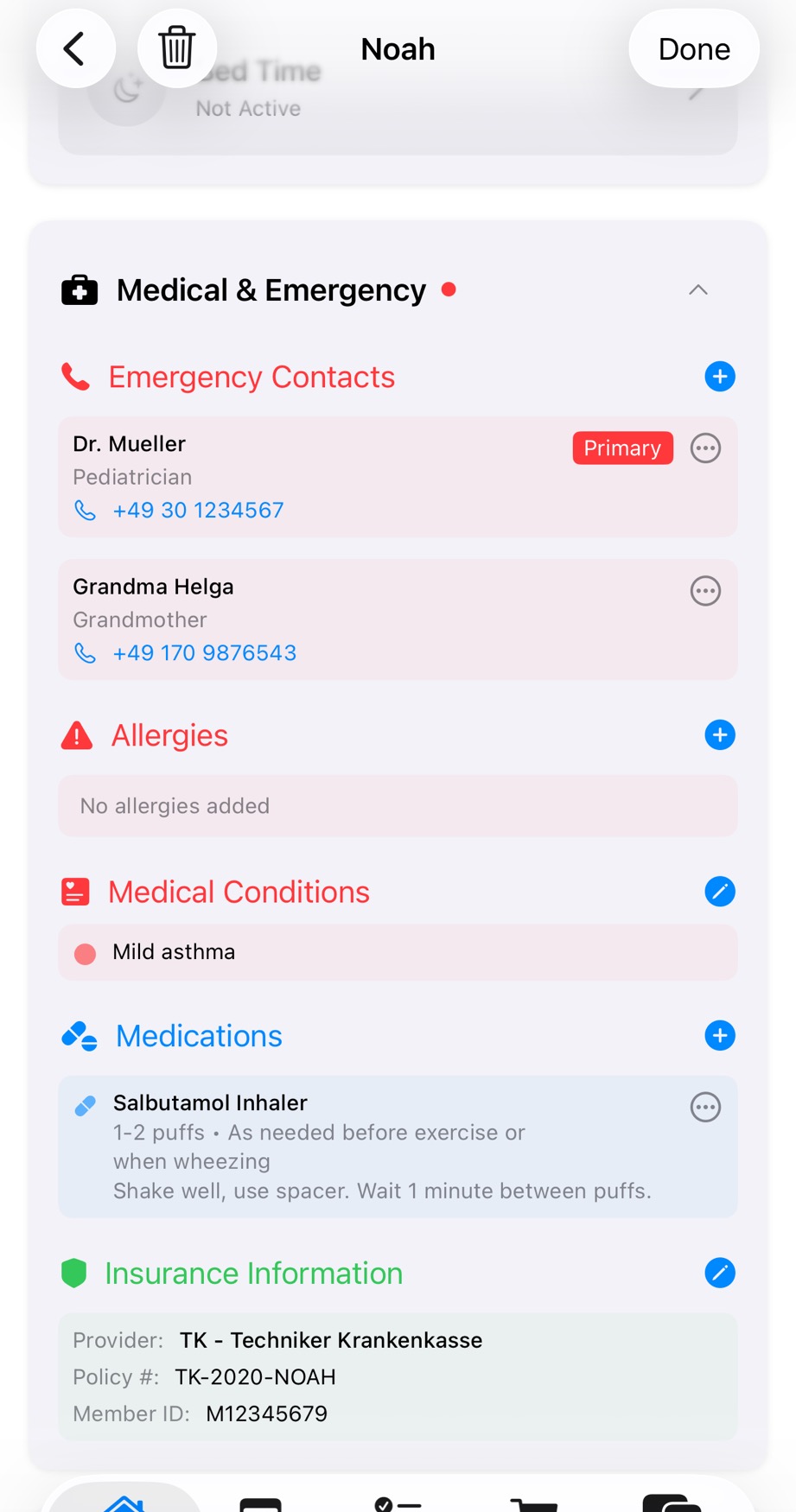
Real scenario: Your au pair is at the playground. Your child gets stung by a bee. Are they allergic? What do they do? Can they find that information right now, on their phone, without calling you?
If the answer is "they'd have to call me," then the medical documentation isn't good enough yet. The standard to aim for: your au pair should be able to handle the first five minutes of any medical situation without needing to reach you. You should still be called, of course — but those first five minutes shouldn't depend on a phone connection.
2. Daily Routines
Kids thrive on routine. Au pairs thrive on knowing what the routine is. For a complete guide to structuring the weekly schedule around these routines, see our au pair schedule guide.
Morning Routine
- What time do they wake up (vs. what time they SHOULD wake up)?
- Breakfast preferences and rules
- Getting dressed — do they pick their own clothes? Uniform days?
- School bag checklist — what needs to go in it daily?
- Drop-off time and procedure
After School
- Snack routine
- Homework expectations
- Screen time rules and limits
- Activities and lessons — where, when, what to bring
Evening Routine
- Dinner time and expectations
- Bath/shower routine
- Bedtime — actual time, wind-down routine, any rituals
- The non-negotiables — "teeth brushed, story read, night light ON"
Pro tip: Write the routine as if you're explaining it to someone who has never met your family. Because essentially, you are.
The details that make routines actually work
The bullet points above are the skeleton. What makes the difference between a routine that works on paper and one that works in practice is the connective tissue — the transitions, the quirks, the workarounds.
For example, don't just write "breakfast at 7:15." Write: "Breakfast at 7:15. Leo takes 5 minutes to fully wake up — don't rush him or he gets grumpy. He'll come to the kitchen on his own. Emma is up instantly and will want to help pour cereal — let her, even though it's messy. If Leo hasn't appeared by 7:20, go check on him — he sometimes falls back asleep."
Include the why behind routines when it's not obvious. "Homework before screen time" is a rule. "Homework before screen time — because once screens are on, it's almost impossible to get him to focus" is a rule your au pair will actually enforce consistently because they understand the reasoning.
Document the fallback plans too. What happens when the routine breaks? "If we're running late for school, skip the lunch box and he'll buy lunch at the cafeteria — his account is prepaid. Send a message in AuPairSync so I know." This kind of detail prevents your au pair from freezing when things don't go perfectly.
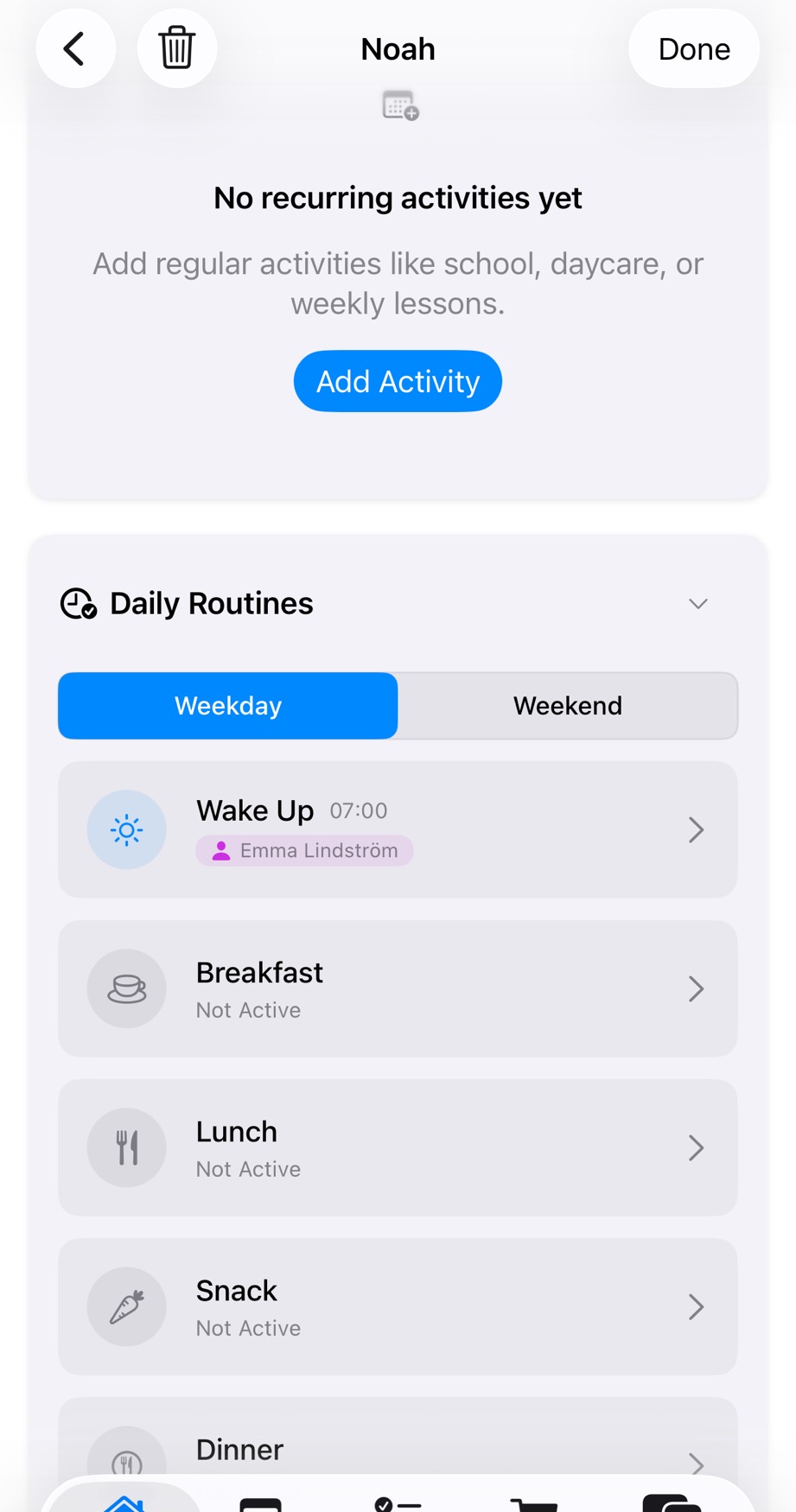
Weekend vs. weekday routines
Don't forget that weekends are usually completely different. Bedtime is later, meals are less structured, activities change. Create a separate weekend routine outline, even if it's looser. "Weekends are relaxed" isn't helpful. "Weekends: sleep in as long as they want, breakfast whenever they're hungry, no screen time before 10 AM, park or outdoor activity in the afternoon weather permitting" gives your au pair a framework without being rigid.
3. Behavioral Patterns and Triggers
This is the stuff that takes parents months (or years) to learn. Save your au pair the trial-and-error.
For each child:
- What makes them upset — and how to handle it
- Comfort strategies — "She needs her stuffed elephant when she's sad"
- Warning signs — "When he gets quiet, he's about to have a tantrum"
- Discipline approach — what you do and DON'T do (be very specific)
- Sibling dynamics — who plays well together, common conflicts
Example:
"When Leo doesn't want to leave the playground, give him a 5-minute warning, then a 2-minute warning. Don't just say 'time to go' — he needs transition time. If he still refuses, offer a choice: 'Do you want to walk to the car or skip to the car?'"
This kind of detail transforms your au pair from confused outsider to confident caregiver.
The discipline conversation you need to have
Discipline is where cultural differences, personal values, and family traditions collide — and where misunderstandings between parents and au pairs happen most frequently. Be explicit about your approach, even if it feels uncomfortable.
What's allowed: "We use time-outs for hitting or throwing. One minute per year of age. Explain why before and after. Never during a full meltdown — wait for them to calm down first."
What's NOT allowed: Be very direct here. "We never threaten to take away a lovey or comfort item as punishment. We never use food as a reward or punishment. We don't compare siblings to each other. We don't shout — if you're feeling frustrated, it's okay to step back for a moment and take a breath."
What to do when nothing works: Every parent has been there. Your au pair will get there too. Give them an exit strategy: "If you're stuck and nothing is working, it's always okay to put on a 20-minute show and regroup. You can also call me or send a message — I won't judge, and I might have a suggestion that works for that specific mood."
Your au pair needs to know that asking for help isn't a sign of failure. It's a sign of good judgment. Make sure your house rules reflect this philosophy.
Emotional vocabulary matters
If your family uses specific language around emotions — "big feelings," "calm-down corner," "feeling check-in" — tell your au pair. Kids respond to familiar language, and an au pair who uses different terminology can accidentally undermine established emotional frameworks.
Similarly, if there are ongoing emotional situations — a recent family change, a friendship struggle at school, anxiety about swimming lessons — brief your au pair. They don't need the full backstory, but they need enough context to respond sensitively. Update this information during your weekly check-ins as situations evolve.
4. Food and Nutrition
This seems simple until your au pair opens the fridge and has no idea what to make for lunch.
Document:
- Likes and dislikes — per child (yes, they're probably different)
- Allergies and intolerances — repeated here because it's THAT important
- Meal ideas — a list of 5-10 easy meals they can make
- Snack rules — what's allowed, when, how much
- Kitchen rules — can they use the oven? What about the expensive knife set?
The "picky eater" guide
If your child is a picky eater (and whose isn't?), give your au pair specific strategies:
- "She'll eat carrots raw but not cooked"
- "He needs ketchup with everything and that's fine"
- "Don't force her to eat — offer alternatives from the approved list"
Make the meal list practical
"Here are some meal ideas" followed by "pasta, rice, chicken" isn't useful to someone standing in your kitchen for the first time. Instead, write mini-recipes with the level of detail a confident-but-unfamiliar cook needs:
Example: "Mac and cheese (Emma's favorite): Use the Annie's boxes from the pantry, second shelf. Follow box directions. She likes it with peas mixed in — frozen peas from the freezer door, just microwave 2 minutes. Leo will only eat it plain, no peas in his. Both kids like it with a glass of milk."
Include where things are stored. Your au pair didn't grow up in your kitchen. "Pasta in the pantry" is vague. "Pasta is in the tall cupboard left of the stove, second shelf. Sauces are one shelf below" means they don't have to open every door and feel awkward.
Cultural food considerations
Your au pair may come from a country with very different food culture. Things that seem obvious to you — how much salt to add, that children drink water with meals, that dessert is only on weekends — may not be obvious to someone from another culture. Frame these as family preferences, not universal rules: "In our family, we…" is better than "Children should…"
Also consider: does your au pair need to follow any dietary rules themselves while cooking for the kids? Are they welcome to eat the family's food freely? Where's the boundary between "family groceries" and "au pair's personal food"? These small details matter for the relationship and are worth clarifying early. Many families include this in their house rules.
5. Social Rules and Boundaries
Your household has unwritten rules that are obvious to you and invisible to everyone else.
Cover:
- Screen time — how much, when, which devices, approved content (include this in your house rules too)
- Playdates — who's allowed over, notification expectations, rules at other homes
- Going out — where can they go? Parks, shops, how far is okay?
- Phone/tablet — does your child have one? Rules around it?
- Stranger rules — what to tell the kids about talking to strangers
- Photos — can the au pair share photos of your kids? On social media?
The screen time guide your au pair actually needs
"Max 1 hour of screen time" raises more questions than it answers. Spell it out:
When: "Screen time is only after homework is done and before dinner. Never in the morning before school."
What: "YouTube is not allowed unsupervised. Netflix Kids and the PBS app are fine. No games on the iPad except on weekends."
How to enforce it: "Set the kitchen timer. When it goes off, give a 5-minute warning. If there's resistance, remind them that screen time tomorrow depends on listening today."
The gray areas: "Educational apps like Duolingo and math games don't count toward screen time. Audio books at bedtime are fine and don't count either."
Playdate logistics
Playdates are surprisingly complex for au pairs to navigate, especially in a new country where social norms may be different. Cover:
Pre-approved friends: List specific children by name and their parents' contact info. "Max can have Liam, Sofia, or Niko over anytime — just send me a message. For anyone else, ask first."
Your home vs. their home: "If Max is invited to someone's home, I need to know in advance and have the parent's phone number. If he's hosting, our rules apply and the visiting child's parents should have your number."
Supervision expectations: "For kids under 8, someone should always be in the same room or within earshot. For older kids, check in every 20-30 minutes."
The safety conversation
Have an explicit conversation about:
- Who is authorized to pick up your children (with photos if possible)
- What to do if someone claims to be a family friend
- When to call you vs. when to call emergency services
- Your neighborhood's specific safety considerations
Be specific about your neighborhood. "We live on a quiet street but the intersection at the end has fast traffic — kids are never allowed to cross it alone." Or: "The park across the street is fine, but the one by the train station isn't — too many blind corners." Your au pair has never walked these streets as a parent scanning for hazards. Tell them what you see.
Photo and social media policy
This deserves its own subsection because it's increasingly important and often overlooked. Be clear about:
- Can the au pair take photos and videos of your children? (Usually yes — it's part of sharing their day with you.)
- Can they share those photos with their own family back home? (Most families say yes, in private messages.)
- Can they post photos of your children on their social media? (Many families say no, or only with faces not visible.)
- What about the children's friends — same rules apply when other kids are in the frame?
Don't make your au pair guess about this. It's an uncomfortable conversation to have after the fact.
Putting It All Together
The families who have the best au pair experiences share one thing: they write things down.
Not in a 47-page manual that nobody reads, but in a living, accessible document that your au pair can reference anytime. Child profiles in an app like AuPairSync, a shared document, a family wiki — the format matters less than the fact that it exists and stays current.
Start before your au pair arrives
Don't wait until day one to start documenting. Begin a week or two before your au pair's arrival. You'll be surprised how much you know instinctively that's never been written down. The process of documenting often reveals gaps — "Actually, what IS our plan if both kids need to be in different places at the same time?" — that are better solved before the first day than during it.
Use the first week to refine
No matter how thorough your documentation is, the first week will surface things you forgot or didn't think to mention. That's normal and expected. Keep a running list during the first week of things to add, and do a proper update at the end of week one.
Better yet, ask your au pair what information they wish they'd had. They'll tell you — and those answers will make the documentation better for every au pair who follows.
Keep it current
Update it when things change. Your child's new medication, a new food allergy, a change in school schedule — keep the information fresh. A weekly check-in is the perfect time to review whether any details need updating.
Set a reminder to review child profiles at least monthly. Kids change fast — what was true about your 4-year-old's eating habits three months ago might be completely different today. Routines shift with school terms. New friendships form. Old fears fade and new ones emerge. Your documentation should be a living snapshot, not a historical artifact.
Your au pair wants to do a great job. Give them the information they need to succeed.
Create detailed child profiles your au pair can access anytime. Download AuPairSync and set your family up for success.