
Julia had done everything right — or so she thought. She'd spent months comparing profiles, running video calls, exchanging voice messages with her agency. She'd finally found Ana from Brazil: warm, experienced with children, and her five-year-old daughter Lina had laughed through the first video call. The room was freshly painted, the fridge stocked, the WiFi password printed on a card by the bed. Perfectly prepared.
Then Ana arrived. Exhausted after 14 hours of travel, jet-lagged, and quietly stunned that it was February outside, not summer. Julia had scheduled a house tour for the afternoon, dinner with the kids, and a nursery handover the next morning. By day three, Ana was supposed to be picking up the children on her own. "So we can find our rhythm quickly," Julia had told herself.
On day four, Ana was crying in her room. Not because she was unhappy. Because she was overwhelmed — too much information, too little time to simply arrive, not a single moment to absorb the fact that she now lived in a foreign country.
Julia's mistake wasn't bad intentions. It was a planning mistake that nearly every host family makes: treating the first week as training instead of as arrival. This guide shows you how to do it better — day by day, from preparation to the moment your au pair is alone with your children for the first time.

Schedules, tasks and costs with your au pair, in one app.

Before Your Au Pair Arrives
Preparation begins weeks before arrival day. What you do before your au pair walks through the door determines whether they feel welcomed into a family — or dropped into a job.
The Room: More Than Four Walls
Your au pair's room will be their only truly private space for the next year. It's the one room in your house that belongs to them. Treat it accordingly.
- Fresh bedding and towels — newly washed and inviting, not the spare set from the back of the cupboard
- Basic toiletries — shampoo, soap, toothpaste to last the first few days until they can shop for themselves
- WiFi password — printed on the desk, not available only on request
- A personal welcome note — handwritten, even if it's just three sentences. "We're so glad you're here" is enough
- A small welcome gift — local snacks, a city guidebook, a prepaid SIM card with data
These feel like small things. They are small things. But they're the difference between "here's your room" and "here's your home."
The House Tour: Structured, Not Overwhelming
Give a house tour — but not a lecture. Focus on what your au pair genuinely needs to know on day one:
- How the heating works (yes, this matters if they've just arrived from the southern hemisphere in January)
- Where spare towels and bedding are kept
- How the washing machine works (it's different in every country, and in every household)
- What's shared in the kitchen and what isn't
- Recycling and rubbish rules — in Germany, this isn't optional
- House keys and alarm code, if applicable
- Emergency numbers pinned to the fridge
Everything else — the children's details, the working hours, the house rules — can wait. Not everything needs to happen on day one.
Key takeaway: The house tour is about survival basics, not the full manual. Save the details for days two and three, when your au pair has had a night's sleep and can actually absorb them.
Day 1: Let Them Arrive
Don't schedule childcare on day one. Your au pair has just traveled potentially thousands of miles. They may never have lived alone abroad before. They're jet-lagged, disoriented, and processing the reality that this is their life now.
Day one should look like this:
- Unpack and settle in — give them time to make the room theirs
- Shower and rest — yes, even in the afternoon
- A relaxed family dinner together — no interrogation, no agenda, just a meal
- A short walk around the neighbourhood — bakery, bus stop, playground, supermarket. That's enough
The goal of day one is for your au pair to feel: I've been welcomed into a family, not dropped into a job that starts immediately.
If you have school-age children, let them lead the neighbourhood walk. Children are excellent hosts when you let them — and it builds an immediate bond that no adult conversation can replace.
Days 2–3: The Handover
Now it gets practical — but at a pace your au pair can process.
Introducing the Children: More Than Names and Ages
The critical information about your children doesn't belong in a verbal briefing that's forgotten ten minutes later. It belongs in writing. For each child, your au pair should know:
- Allergies and medications — this is non-negotiable. Document everything in writing, with dosage instructions and the paediatrician's emergency number
- Daily routines — wake-up times, nap schedule, bedtime rituals
- School or nursery logistics — drop-off times, pickup procedures, who is authorised to collect them, what happens if they're ill
- The quirks — "She won't eat if the foods touch each other" or "He needs his blue blanket for naps"
Our guide on setting up child profiles gives you a detailed template so you don't forget anything. The key point: write it down. Verbal information gets lost in the stress of the first few days.
Shadowing: Watch Before You Do
Before your au pair does anything alone, they should observe your routine for one to two days. That means:
- Morning: From waking the children through breakfast to the school or nursery drop-off
- Lunchtime: Cooking, eating, tidying up
- Afternoon: Playground, activities, homework
- Evening: Dinner, bath time, bedtime routine
Important: Show your au pair the version of your routine you'd actually want them to replicate. Not the "lazy Saturday" version where the children sit in front of the tablet for two hours. If you want your au pair to have breakfast ready by 7:30, do exactly that during the shadowing days.
Key takeaway: Shadowing isn't wasted time — it's the single best investment you can make in your au pair's confidence. Two days of watching your routine prevents weeks of confusion and corrections later.
The Ground Rules Conversation
Have this conversation on day two or three — not day one (too early, too much) and not in the second week (too late, habits have already formed).
What you should cover:
- Working hours — specific start time, specific end time, which days are off. No vague phrases like "about 30 hours." A clear weekly schedule. If you need help structuring one, see our au pair schedule guide or download our free printable schedule template
- Quiet hours — when is it too late for noise? When can they have visitors? What about music volume?
- Car usage — if your au pair will drive: what are the rules? Who pays for petrol? What about insurance?
- Phone usage during childcare — set a clear expectation, not "just use common sense"
- Food and kitchen — what's shared, are there dietary rules in the household?
- Overnight guests — allowed or not? Under what conditions?
Then write it all down. Verbal agreements get forgotten, misunderstood, or remembered differently. A shared document — or better yet, a shared system — keeps everyone aligned. We've written a full guide on house rules for au pairs that gives you a ready-made template for this conversation.
| Topic | Be specific | Not vague |
|---|---|---|
| Screen time | "Max 30 minutes of tablet per day" | "Not too much screen time" |
| Kitchen cleanup | "Please clean the kitchen after dinner" | "Keep things tidy" |
| Working hours | "Monday–Friday, 7:30–13:00 and 15:00–18:00" | "About 30 hours a week" |
| Days off | "Saturday and Sunday are free" | "You'll get enough time off" |
| Car | "Only for childcare errands, not personal use" | "Be sensible with the car" |
Days 4–5: Supervised Solo Time
Now your au pair takes over — but you're still in the house. Maybe you're working from home, maybe you're running errands in the kitchen. You're available, but you're not intervening.
This is the phase where many host families make the mistake of hovering. Commenting on every decision, checking every meal, coming in every time a child cries for a moment. Resist the urge.
Your au pair needs to find their own rhythm. They'll do things differently from you. That's not wrong — it's different. As long as the children are safe and the basic rules are followed, give your au pair space.
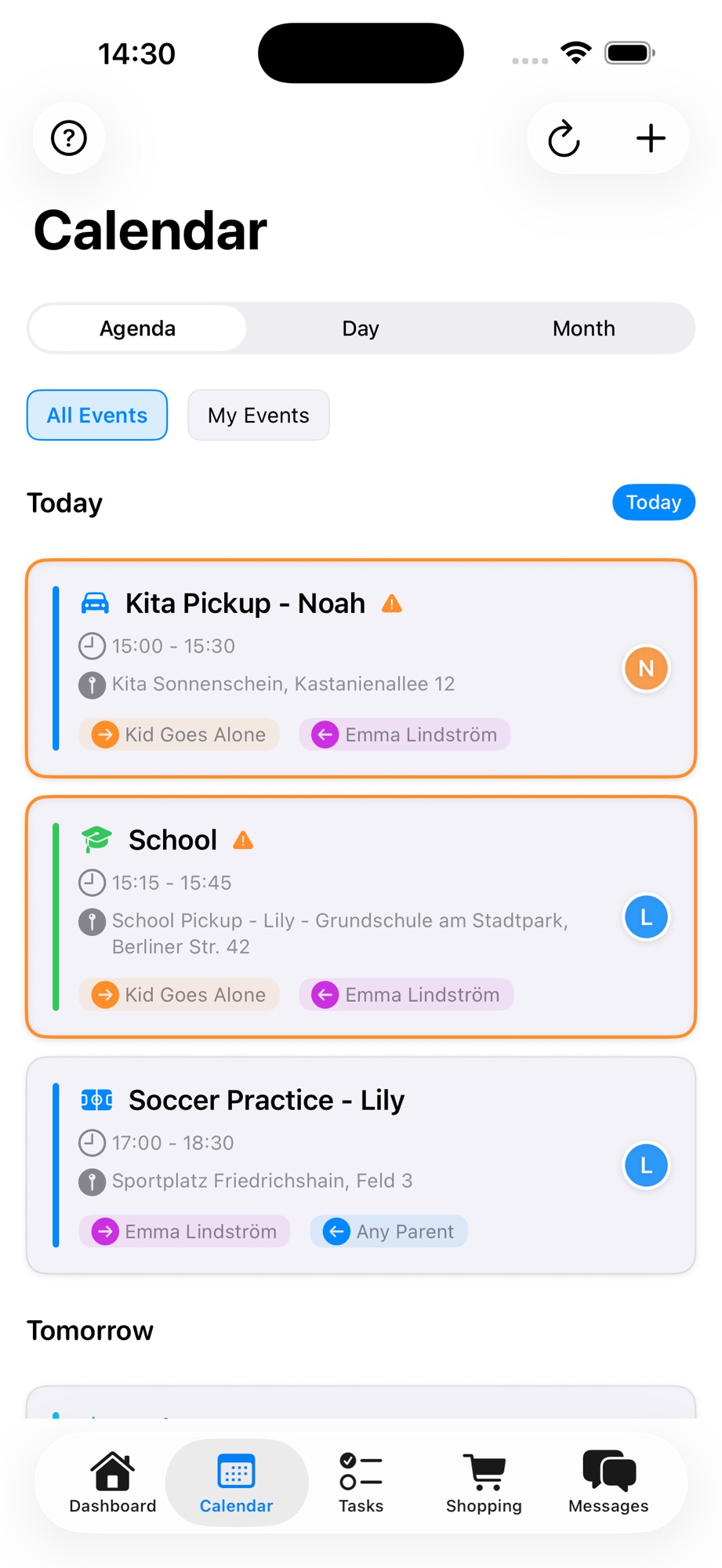
This is where having information accessible digitally pays off. Instead of constantly having to ask, your au pair can check schedules, child profiles, and instructions on their own — for example through AuPairSync, where you can leave tasks with photos and step-by-step instructions. It takes the pressure off both sides: your au pair doesn't feel helpless, and you don't have to explain everything three times.
The Daily Debrief
At the end of each day during this phase, sit down with your au pair for a quick 10-minute conversation. Not an evaluation — a check-in.
- What went well today? — start with the positives
- What felt confusing or unclear? — open the door for questions
- Is there anything you need? — practical support, not just emotional
- Any adjustments for tomorrow? — small tweaks prevent big problems
Keep it light and supportive. This is not a performance review. It's a conversation between two adults figuring out a shared routine.
Common First-Week Mistakes
Mistake 1: Information Overload
You know the feeling from your own first day at a new job: after three hours of induction, you've already forgotten half of it. Your au pair feels the same — only in a foreign language, in a foreign country.
Spread information across the week. Anything that isn't life-critical on day one can come on day three. Anything that's written down doesn't need to be explained immediately.
Mistake 2: No Downtime
Your au pair needs breaks. Not just from work, but from your family. That sounds harsh, but it's important: someone who is with a new family 24 hours a day needs moments alone. Don't fill every evening with family activities. Let your au pair go out on their own, explore the city, meet other au pairs.
Mistake 3: Vague Expectations
"Just use common sense" is the worst instruction you can give. Your au pair doesn't know your standards or your unspoken rules. Be specific: "Please clean the kitchen after dinner" is better than "keep things tidy." "The children can have 30 minutes of tablet per day" is better than "not too much screen time."
Mistake 4: Forgetting How Young They Are
Most au pairs are between 18 and 26. Some are living away from home for the first time. They will feel homesick, uncertain, and they will make mistakes. Patience and empathy aren't weaknesses — they're the foundation for your au pair to build trust and feel confident enough to ask questions rather than repeat mistakes.
Key takeaway: The most common first-week mistake isn't getting something wrong — it's trying to get everything right too fast. Slow down. Your au pair has a whole year to learn your routines. They only have one first week to feel welcome.
Your First-Week Checklist
So you don't forget anything, here's the full plan at a glance:
Before arrival:
- Prepare the room (fresh bedding, towels, toiletries)
- WiFi password and house keys ready
- Welcome gift and personal note
- SIM card with local data (if arriving from abroad)
- Write up child profiles — allergies, routines, quirks
- Emergency numbers on the fridge
- Familiarise yourself with your local au pair visa requirements if applicable
Day 1:
- No childcare scheduled
- Let them unpack, rest, and settle in
- Relaxed family dinner together
- Short neighbourhood walk
Days 2–3:
- House tour (focused, not overwhelming)
- Introduce the children and their routines
- Shadowing the full daily routine
- Ground rules and expectations conversation
- Write down all key agreements
Days 4–5:
- Au pair takes over with you in the house
- Available for questions, but not hovering
- Daily 10-minute debrief each evening
- Start noting what's working and what needs adjusting
End of week:
- Joint review: does the schedule work? Does the au pair need anything?
- Make first adjustments as needed
- Discuss the plan for week two — and establish a weekly check-in habit going forward
The First Week Defines the Whole Year
The contracts, the costs, the agency paperwork — all of that matters. But no contract in the world can replace what happens in the first seven days. This is the week that determines whether your au pair feels they've been welcomed into a family — or started a job where they happen to also live.
The families where the au pair year works well share one thing: they take their time in the first week. Time to explain, time to listen, time to breathe. They treat their au pair as a young person who has just left their entire life behind — because that's exactly what happened.
Your au pair chose your country. Chose your family. Give them a first week that shows it was the right decision.

Planning your au pair year? Download AuPairSync and keep schedules, tasks, and child profiles organized from the very first week.