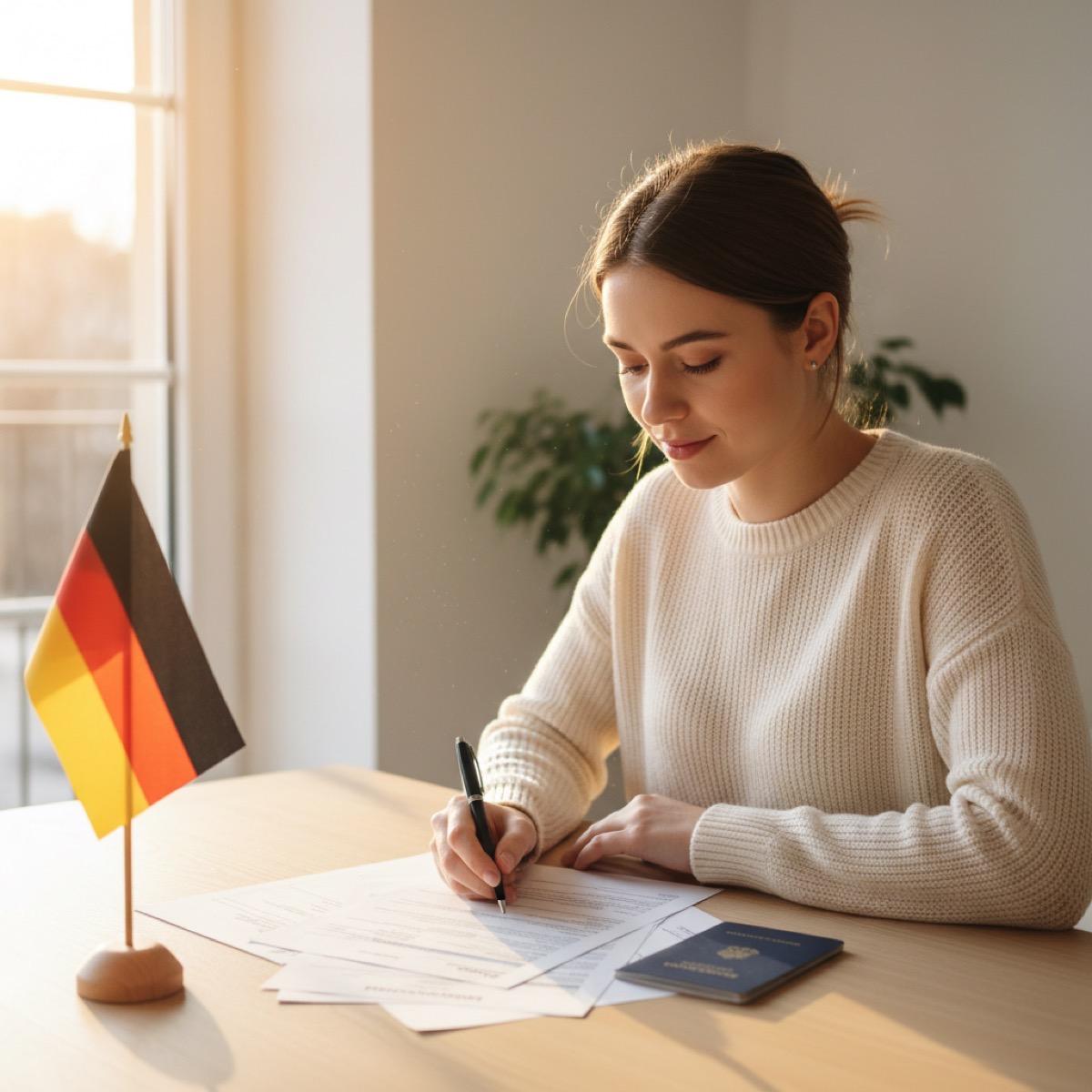
Au pairs from outside the EU, the EEA and Switzerland need a national visa from the German embassy or consulate before they travel to Germany (BA information sheet 4.2). Nationals of Australia, Canada, Israel, Japan, New Zealand, South Korea, the United Kingdom and the United States are the exception: they can enter without a visa and apply for their residence permit in Germany (§ 41 AufenthV). To qualify, you must be 18 or older and under 27 when you apply, speak A1-level German, and have a host family that pays €280 pocket money a month and at least €840 towards your German course (BA information sheet 1.6, 1.7, 2.1, 2.2). The visa fee is €75 (§ 46 AufenthV, Federal Foreign Office).
The rules come from the Federal Employment Agency's au pair sheet (April 2023 edition), which the embassies and immigration offices apply, and the visa rules from the Federal Foreign Office. Below is each requirement, the application step by step, and what happens after you land.

Your hours, tasks and host family chat, in one app.

Who needs an au pair visa for Germany?
It depends on your passport.
EU, EEA and Swiss citizens don't need a visa or a work permit to be an au pair in Germany (Federal Employment Agency). You still register your address after you arrive.
Australia, Canada, Israel, Japan, New Zealand, South Korea, the United Kingdom and the United States. Nationals of these countries can enter Germany without a visa and apply for the au pair residence permit at the local immigration office (Ausländerbehörde) once they're in the country (Federal Employment Agency). More on this route below.
Everyone else needs a residence title, applied for as a visa at the German embassy or consulate before entry. The Federal Employment Agency has to approve the au pair placement, and the visa then allows you to start as an au pair straight away. Don't start working before you hold the visa (Federal Employment Agency).
The visa you need is the national visa (category D). A Schengen visa (category C) only covers short stays of up to 90 days and doesn't let you work as an au pair (Federal Foreign Office). Mixing the two up is one of the most common and most expensive mistakes.
Au pair visa requirements
Age: at least 18, under 27 when you apply
You must be at least 18 when you join the family, and you must not have reached your 27th birthday when you apply for the residence title (Federal Employment Agency). The same sheet adds a warning: the age limit must not be passed before the immigration office has decided, so apply well before you turn 27. If your birthday is close, start now rather than next month.
German at level A1
You need basic German at level A1 of the Common European Framework of Reference. At that level you can introduce yourself, ask and answer simple questions about where you live and who you know, and follow a conversation when people speak slowly. The embassy, the consulate or the immigration office establishes your level (Federal Employment Agency). Some missions check it in a short conversation at the appointment, so study properly instead of relying on a certificate.
A host family that qualifies
For au pairs from outside the EU, the host family must, as a rule, speak German as their native language, and at least one adult in the family must be a German, EU, EEA or Swiss citizen. If German is only the family language at home, the placement can still be approved as long as you don't come from the host parents' home country. The family must include at least one child under 18 living in the household, and you can't be placed with relatives (Federal Employment Agency).
A written au pair contract
You and your host family sign a written contract before the stay starts. It should cover:
- the start and end dates; the stay must last at least six months and at most one year
- working hours of, as a rule, no more than six hours a day and 30 hours a week (BA information sheet 1.3) (see how to structure your au pair schedule)
- at least 1.5 full days off a week, with at least one free Sunday a month, and four free evenings
- pocket money of €280 a month (BA information sheet 1.7)
- paid holiday of four weeks for a full year, otherwise two working days for each full month
- the host family's contribution of at least €840 to your German course (€70 a month or one payment), plus travel to the nearest suitable course (BA information sheet 1.6)
- your own room and meals, free of charge
All of these figures are set by the Federal Employment Agency. The sheet we cite is the April 2023 edition; check it for a newer version before you sign.
Health and accident insurance
You must be insured against illness, pregnancy and childbirth, and accidents for your stay in Germany, and the host family pays all premiums (Federal Employment Agency). Many agencies also recommend liability insurance. Bring the insurance confirmation to your visa appointment, and make sure the policy starts on your first day in Germany.
A valid passport
You need a valid passport from your home country for entry and for the whole planned stay (Federal Employment Agency). If yours runs out during the au pair year, renew it before you apply.
How to apply, step by step
Step 1: Find the embassy or consulate responsible for you
You apply at the German mission responsible for your place of residence (Federal Foreign Office). You can't pick a consulate in another country because it has shorter queues. Check your mission's website: document lists and booking systems differ from one mission to the next.
Step 2: Book your appointment early
Processing often takes a long time, so the Federal Employment Agency advises applying as early as possible before your planned start (Federal Employment Agency). Book the appointment as soon as you have a host family and a start date.
Step 3: Prepare your documents
Your mission's checklist is the one that counts. Typically it includes:
- your passport, plus copies of the data page
- biometric passport photos
- the signed au pair contract
- the health and accident insurance confirmation
- the completed visa application form
- anything else your mission lists, such as a letter explaining why you want to be an au pair
The au pair preparation checklist lists the documents for each host country and prints. Keep scans of everything as well. AuPairSync lets you and your host family store and share the contract, insurance papers and visa documents in one place.
Step 4: Attend the appointment
Bring the originals and the copies. Some missions check your German with a few simple questions: why you want to go to Germany, what you know about your host family, what experience you have with children. Answer simply and honestly.
Step 5: Pay the visa fee
The national visa fee is €75 (Federal Foreign Office). Check in advance how your mission takes payment.
Step 6: Wait for the decision
The Federal Employment Agency has to agree to the placement before the visa is issued (BA information sheet 4.2). Stay reachable while you wait, and answer quickly if the mission asks for more documents.
The visa-free route
If you're from Australia, Canada, Israel, Japan, New Zealand, South Korea, the United Kingdom or the United States, you can enter Germany without a visa and apply for the residence permit at the immigration office responsible for where you live (Federal Employment Agency). You skip the embassy appointment, but you still need the same documents: contract, insurance, passport, photos and your address registration.
Apply soon after you arrive, since processing takes time and the age limit still applies until the office decides. Many cities let you book immigration office appointments online, so look for a slot before you fly. For questions about your situation, the German embassy or consulate in your country is the place to ask.
What the visa costs and who pays
You pay:
- the national visa fee of €75 (Federal Foreign Office)
- your journey to Germany and back, which the au pair normally pays according to the Federal Employment Agency; some host families contribute
- passport, photos and any certificate your mission asks for, at local prices
Your host family pays:
- €280 pocket money a month
- at least €840 towards your German course, as €70 a month or one payment, plus travel to the nearest suitable course
- all health and accident insurance premiums
- your room and meals
Host families can find the full breakdown in how much an au pair costs in Germany.
After you arrive: registration and the residence permit
For your first days with the family, see The First Week with Your Au Pair: A Survival Guide.
Register your address (Anmeldung)
Register at the local Bürgeramt shortly after you move in. You need your passport and a confirmation from your host family that you live at their address (Wohnungsgeberbestätigung). Keep the registration certificate you get; you'll need it for the residence permit and for most other paperwork in Germany.
Apply for the residence permit before your visa expires
The au pair visa is usually issued for three months. Before it expires, you apply for a residence permit (Aufenthaltserlaubnis) at the immigration office responsible for where you live (Federal Employment Agency). That office is also your first contact for questions about your stay.
Bring your passport with the visa, the registration certificate, the au pair contract, the insurance confirmation and biometric photos. Issuing the residence permit costs €100 (§ 45 AufenthV).
How long can you stay?
An au pair stay in Germany lasts at least six months and at most one year. After that, a second au pair stay isn't possible, even if you didn't use the full year (Federal Employment Agency). If you want to stay in Germany afterwards, for example to study, you need a different residence permit.
Common mistakes
Applying too late. Processing takes time, and a missing document means a new appointment. Start as soon as you have a host family.
Applying for the wrong visa. A Schengen visa (type C) is for short stays; an au pair needs the national visa (type D) (Federal Foreign Office).
An incomplete folder. Go through your mission's list and the preparation checklist, then have your host family check it too. It's also a good moment to talk about house rules, so you agree on expectations before you arrive.
Treating A1 as a formality. Missions can check your German at the appointment. Take a proper course.
No insurance confirmation at the appointment. "My host family will arrange it" isn't enough. Ask them to send you the policy confirmation before your appointment date.
Leaving it late when you're close to 27. You must be under 27 when you apply, and the limit must not be passed before the decision. If your birthday is near, apply now.
Frequently asked questions
Do I need a visa to be an au pair in Germany?
Only if you are not from the EU, the EEA or Switzerland. Au pairs from outside those countries need a residence title, which they apply for as a national visa at the German embassy or consulate before entering. Nationals of Australia, Canada, Israel, Japan, New Zealand, South Korea, the United Kingdom and the United States can enter without a visa and apply in Germany.
What is the age limit for an au pair visa in Germany?
You must be at least 18 when you join the family, and you must not have reached your 27th birthday when you apply for the residence title. The Federal Employment Agency advises applying well before you turn 27, because the age limit must not be passed before the immigration office decides.
How much does the au pair visa for Germany cost?
The national visa fee is €75, according to the Federal Foreign Office. Once you are in Germany, issuing the residence permit costs €100 under section 45 of the Residence Ordinance.
How much German do I need for an au pair visa?
Basic German at level A1 of the Common European Framework of Reference. The German embassy, the consulate or the immigration office establishes your level.
How long can an au pair stay in Germany?
At least six months and at most one year. A second au pair stay in Germany is not possible, even if you did not use the full year.
Who pays for the au pair's health insurance?
The host family. The au pair must be insured against illness, pregnancy and childbirth, and accidents, and the host family pays all premiums.
Planning your au pair year in Germany? Download AuPairSync to keep your documents, schedules, and host family communication organized from day one.