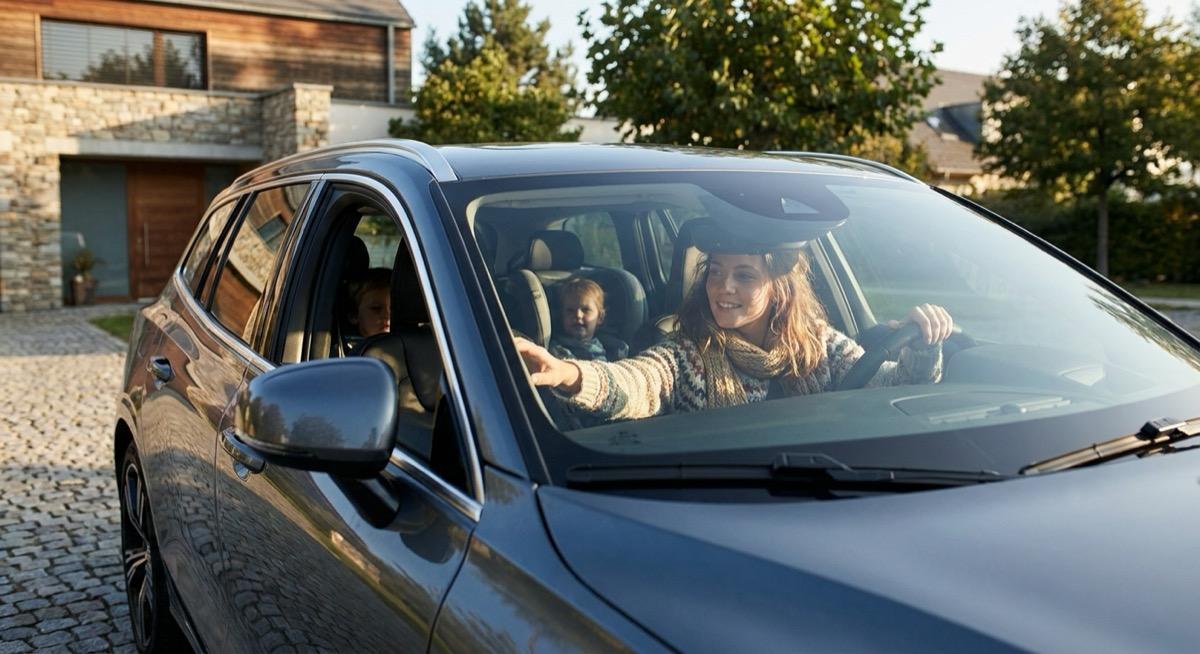
The Schmidts handed Mariana the keys on her second day. They lived in a village forty minutes from the nearest school; the car was the lifeline. Mariana had been driving in São Paulo for six years and felt completely confident. Two weeks later, on a slow corner near the bakery, a delivery van clipped her wing mirror. No injuries, two scratched bumpers, an exchange of phone numbers, a Polaroid-clear afternoon.
That evening it took the Schmidts ninety minutes on the phone with their insurer to discover three things they had assumed were sorted. Mariana's Brazilian licence was technically valid for six months in Germany — but only with a translation she didn't have. Their policy listed her as a named driver, but at the wrong age band, which voided some of the coverage. And the deductible the insurer mentioned wasn't the one the Schmidts remembered agreeing to.
Nothing about that afternoon was Mariana's fault. The conversation that should have happened on day one — about licence, insurance, and what the car was actually allowed to be used for — had simply not happened. The keys had moved faster than the rules.
Cars are the part of host-family life where small assumptions become expensive surprises. This is the conversation to have before the keys ever leave the hook.
The Three Questions to Answer Before Handing Over the Keys
There are dozens of details that come up around au pairs and cars, but they all reduce to three questions. If you can answer these clearly, the rest is paperwork.
Key takeaway: Licence validity, insurance coverage, scope of use. Get all three right before any keys move.
- Is the licence legally valid here? A foreign licence is not automatically usable in your country, and validity windows differ.
- Does your insurance actually cover this driver? Most policies require an explicit named-driver entry — not a vague "anyone living in the house" assumption.
- What is the car actually allowed to be used for? On-duty trips only, or personal errands too? When? Where to? With or without the children?
The rest of this guide unpacks each in detail, then covers the accident protocol and the conflicts that come up most often.
Driving Licence Validity: Country by Country
This is the area with the most foggy assumptions, because most host families have never had to think about how a foreign driver crosses borders.
The German Rules 🇩🇪
In Germany, an EU/EEA licence is valid indefinitely. A licence from outside the EU/EEA — Brazil, the U.S., the Philippines, South Africa — is valid for six months from the date of taking up residence (§ 29 FeV — Fahrerlaubnis-Verordnung). After six months, the au pair must convert the licence (some countries qualify for a simplified conversion, others require a German theory and practical test).
Two crucial details:
- The original licence must be carried alongside an official German translation — usually from ADAC (
~50–70 €) or a sworn translator. A photocopy or DeepL print is not sufficient. - For licences not in the Latin alphabet (e.g., Cyrillic, Arabic, Mandarin), an International Driving Permit (IDP) issued in the home country is required.
The U.S. Rules 🇺🇸
For au pairs on the J-1 programme, the rules vary by state. Most states allow driving on a foreign licence for the length of the visa or the first 30–90 days, after which a state licence is required. Some states (e.g., New York, Florida) accept the foreign licence indefinitely as long as the visa is valid; others (e.g., California) require an IDP from day one. The U.S. State Department's au pair page and the relevant DMV are the only authoritative sources — agency websites are often out of date.
The UK Rules 🇬🇧
A licence from the EU/EEA, Switzerland, or one of around 15 "designated countries" (including the U.S., Canada, Australia, Japan) is valid in Great Britain for 12 months. Anyone else can drive on their original licence for 12 months but must then take a UK driving test. Verify the current list on gov.uk's check-driving-licence page.
Quick Reference Table
| Country | Validity of foreign licence | Translation/IDP needed? |
|---|---|---|
| Germany 🇩🇪 | 6 months from residency (EU: indefinite) | Official translation; IDP for non-Latin scripts |
| USA 🇺🇸 | State-dependent, 30 days to indefinite | IDP recommended in most states |
| UK 🇬🇧 | 12 months for EU/EEA + designated countries | Not required for designated countries |
| France 🇫🇷 | 1 year for non-EU; EU: indefinite | Translation by sworn translator |
🌍 Country-specific section. Rules change. Always check the current government source for the country you're in: bmvi.de for Germany, your state DMV for the U.S., gov.uk for the UK, service-public.fr for France.
Insurance: The Part That Surprises Everyone
Insurance is where the calm "of course she's covered" assumption most often falls apart. There are three things to check.
Is the Au Pair on the Policy?
Most car insurance policies have one of three structures:
- Named drivers only. The au pair must be explicitly added by name. Unauthorised drivers may have no coverage at all.
- Permitted drivers based on category (e.g., "anyone over 25 with permission of the policy holder"). The au pair must fit the category.
- Any driver with permission, sometimes called "open" coverage. Rare and usually expensive.
Call your insurer and read out the question literally: "Is [au pair name], age X, holding a licence from [country], covered to drive my car?" Get the answer in writing — email is fine.
Age Surcharges and Premium Adjustments
In most markets, drivers under 25 add a premium surcharge. In Germany, the Schadenfreiheitsklasse-System (SF-class) treats new named drivers based on their own claims history, which is usually nonexistent for a young au pair — meaning the policy is rated as if they were a brand-new driver. This can add 10–40 % to the annual premium.
Don't let surprise premiums become the au pair's problem. Whatever the surcharge ends up being, it is part of the cost of having an au pair who drives. Bake it into your budget — never deduct it from pocket money.
Deductible (Excess) and Who Pays
If the au pair has an accident, who pays the deductible?
The fairest, most common arrangement:
- Family pays the deductible for accidents that occur during on-duty driving (school run, errands, family trips with the au pair driving) regardless of fault.
- At-fault personal-use accidents are negotiated case by case — some families ask the au pair to contribute up to a stated cap (e.g., one month's pocket money), others simply absorb it as a cost of doing business.
- Tickets and fines for traffic violations (speeding, parking) are almost always the au pair's responsibility.
Whatever you agree, write it down. A 200 € parking ticket six months in is a much harder conversation if there's no prior agreement.
Setting Clear Car-Use Rules
The rules conversation belongs in the same week as the rest of your house rules — not somewhere down the line when an issue arises. The au pair should leave that conversation knowing the answers to these:
- When can the car be used for personal errands? (e.g., "evenings and weekends after the kids are taken care of")
- How far can the car go? (Same town only? Within 100 km? Anywhere within the country?)
- Are overnight stays away from home okay? (e.g., visiting friends in another city)
- Refuelling responsibility? (Family fuels for on-duty miles; au pair fuels for personal trips. Or a flat allowance.)
- Parking — paid or street? Who covers permits, garage fees?
- No-go list. Most families forbid alcohol behind the wheel, period; some also forbid the car for transporting non-family members or for trips to parties.
A workable default that we see often:
- On-duty driving: Family pays everything (fuel, parking, deductible if accident).
- Personal use during free time: Allowed within the country, return same day or with prior notice. Au pair pays own fuel beyond a small stipend, deductible negotiated.
- Long trips (more than 200 km / overnight): Always discussed in advance, never assumed.
- Family vacations with the car: A whole topic on its own — see our guide to on-duty vs. off-duty during family trips for how driving fits into a holiday week.
Cover the same ground as you would for any other scheduled responsibility — make it explicit, write it down, hand over a copy.
What to Do After an Accident
This is the section to read aloud with the au pair on day one, then file where they can find it. Most accidents end peacefully when the protocol is followed; they escalate when it isn't.
At the Scene
- Stop. Always. Even for a minor scrape. Driving away — even from "just" hitting a parked car — can be a criminal offence in most countries (e.g., German
§ 142 StGBfor Unfallflucht). - Check for injuries first. Anyone hurt → call emergency services (
112in EU,911in U.S.,999in UK) before anything else. - Move the car if it's safe. Don't leave it blocking traffic if it can be moved without further damage.
- Photograph everything. All angles of all vehicles, position relative to road, road signs, weather conditions, license plates. Time-stamped photos save weeks of dispute.
- Exchange information. Names, addresses, phone, insurance company and policy number, registration. Do not admit fault even casually —
"Sorry"can be quoted later. - Witnesses. If anyone saw it, get a name and number. Witnesses fade fast.
- Police involvement. Required for: injuries, hit-and-run, disputes about fault, damage above local thresholds (e.g., ~750 € in Germany), drugs/alcohol suspected. Otherwise often optional but often wise.
Right After
The au pair should call the host family before calling the insurer. The family decides the order from there: insurer, possibly tow service, possibly the police if they weren't on scene. Use a shared messaging thread so the conversation is visible to both parents and the au pair simultaneously — not a series of one-on-one calls.
Key takeaway: Day-one accident protocol saves weeks of insurance back-and-forth. Print it. Hand it over. Don't assume common sense — the au pair may have grown up in a system with completely different defaults.
Documentation
Within 24 hours: file the claim with the insurer, save all photos and the police report (if any) where both family and au pair can access them — and add a follow-up task for the insurance call-back so it doesn't slip. Tools like AuPairSync keep insurance papers, policy numbers, claim references and accident reports in one organised place — useful when the same incident is still being correspondence-pinged six weeks later.
Common Conflicts and How to Prevent Them
The recurring car disputes between host families and au pairs are surprisingly predictable.
Conflict 1: "I didn't realise it was just for the school run"
The setup: family says "you can use the car", meaning during work hours for childcare. Au pair takes it for a 200 km weekend trip to visit friends. Family is furious, au pair is confused.
The fix: define personal-use rules explicitly in week one. "Yes, you can use the car on free evenings and weekends, but check with us first for trips longer than X." Write it down.
Conflict 2: "She got a parking ticket and assumed we'd pay"
The setup: au pair receives a 60 € parking fine, doesn't mention it, lets it slide into a higher reminder fee. Family discovers the letter weeks later.
The fix: handle traffic-violation policy explicitly upfront. "Tickets are yours, but bring them to us within 48 hours so we can sort out the paperwork together." The 48-hour rule prevents shame-driven hiding.
Conflict 3: "Why is the tank always empty when I need it?"
The setup: au pair uses the car for personal trips, returns it on fumes. Family rushes out for school pickup and ends up at the petrol station first.
The fix: establish a return-state rule. Common: "Always return the car with at least a quarter tank, regardless of what you used it for." Easier to enforce than per-mile calculations.
Conflict 4: "She had her boyfriend with her in the car"
The setup: au pair drives with friends or partner for personal trips. Family — which had no rule about non-family passengers — feels uneasy retrospectively.
The fix: address it upfront. If the family is comfortable with non-family passengers during free time, say so. If not, say that too. The "I assumed it was obvious" stance only generates conflict.
Conflict 5: "She was driving the kids and didn't tell us about the scrape"
The setup: minor parking-lot bump while picking up the kids. Au pair fixes the wing mirror with insurance, doesn't mention it because it felt small.
The fix: any incident involving the children, no matter how small, must be reported the same day. This is the one non-negotiable rule. Frame it as safety, not blame.
Practical Setup: Document Everything in One Place
Five documents need to be accessible to both the family and the au pair within seconds, not minutes:
- Insurance policy (named-driver entry visible)
- Policy number + 24-hour claims hotline
- Driving licence (au pair's, with translation/IDP if applicable)
- Vehicle registration + emissions sticker proof
- One-page accident protocol (the steps from earlier in this article)
A glove-compartment folder works for the physical documents. For the digital copies, a shared documents space ensures the au pair doesn't have to call the family at 9 p.m. on a Saturday to find the insurer's number. Pair this with a shared family calendar for booking the car for personal trips, so no one ends up locked out by surprise.
For the bigger family-organisation picture — schedules, tasks, communication, documents — the family dashboard is the single view that holds it together.
The Bigger Picture
Cars are an unusual host-family topic because they sit at the intersection of trust and risk. You're handing a young person from another country the keys to something worth 15,000–40,000 €, often within their first week, and telling them to drive your children around in it.
The families that handle this well don't agonise over the trust part. They get the rules clear up front, build the muscle of "this is normal to talk about", and treat insurance and licence paperwork as logistics rather than tests of character. When something does go wrong — and on a long enough timeline, something will — the conversation is about repair, not blame.
The families that handle it badly skip the rules conversation entirely, then handle the inevitable scrape as a personality issue. That dynamic creates exactly the kind of resentment that turns a placement sour months later.
A scratched wing mirror is a story you tell at dinner. An undocumented insurance dispute is a story you tell to a lawyer.
Get the conversation in early. Print the protocol. Document the rules. Then drive.
Need somewhere to keep insurance papers, accident protocols and car-use rules where both you and your au pair can find them? Download AuPairSync — your shared family brain, including documents, schedules and emergency contacts in one place.