
Lisa had been hosting au pairs for three years and considered herself a pro. Her current au pair, Camila from Argentina, was warm, reliable, and great with the kids. Everything seemed fine — until the Tuesday morning Camila sat down at breakfast, mascara smudged, and said she wanted to go home.
Lisa was stunned. There had been no warning signs. No arguments. No dropped balls. But over the next hour, everything poured out. Camila felt isolated because she didn't know anyone in the neighborhood. She thought Lisa's husband was unhappy with her cooking. She was confused about whether she was supposed to fold the parents' laundry or just the kids'. She'd been staying up until midnight worrying about a dentist appointment she didn't know how to book in German.
None of these problems were serious. Every single one could have been solved in five minutes. But because nobody had asked — and Camila didn't want to seem ungrateful — they'd stacked up silently for two months until the weight became unbearable.
Lisa kept Camila. They talked it out, fixed every issue that afternoon, and finished the year as genuine friends. But Lisa also made a change that she now calls the single best thing she's ever done as a host parent: she started a weekly check-in.
Why Small Problems Become Big Ones
The au pair relationship has a structural flaw that most families don't recognize: it combines a professional arrangement with a deeply personal living situation, then adds a language barrier and a cultural gap on top. In a normal job, your manager schedules regular one-on-ones. In a normal flatshare, you eventually have a kitchen conversation about the dishes. But the au pair relationship falls between these categories, and as a result, neither side knows when or how to raise issues.
Au pairs, especially in their first placement, are acutely aware of the power dynamic. They live in your house. They depend on your goodwill for their visa, their room, and their daily life. Even the most confident au pair will hesitate before saying "I think we need to talk about something." They don't want to seem difficult. They don't want to risk the relationship. So they stay quiet — and quiet problems ferment.
Host families, meanwhile, often avoid raising issues because they don't want to sound like a boss. You've invited this person into your home as a family member. Saying "the kids' lunch boxes weren't packed properly on Thursday" feels uncomfortably managerial. So you let it slide, then let it slide again, until you're irritated enough to snap — and now the au pair is blindsided by criticism that seemingly came from nowhere.
Key takeaway: The au pair relationship lacks a natural feedback channel. A weekly check-in creates one — structured, low-pressure, and consistent enough that raising issues becomes normal rather than dramatic.
What a Weekly Check-In Actually Looks Like
Forget the word "meeting." This isn't a performance review. It's a coffee. A walk. A twenty-to-thirty-minute conversation, same time each week, where you and your au pair sit down without the kids and talk about how things are going.
The Basics
- When: Pick a consistent slot. Sunday evening and Monday morning work well — you're looking ahead to the coming week. Avoid Friday afternoons when everyone's mentally checked out.
- Where: Somewhere comfortable and private. The kitchen table after the kids are in bed. A café on the corner. Not in the car between errands.
- Who: At least one host parent and the au pair. Both parents if possible, but don't let scheduling prevent it from happening.
- How long:
20 to 30 minutes. Enough to cover real ground. Short enough that it never feels like a burden.
The Four-Part Structure
You don't need a rigid agenda, but having a loose structure prevents the conversation from dissolving into small talk or spiraling into one long complaint. Most experienced host families settle on something like this:
-
What went well this week? — Start positive. Acknowledge something specific the au pair did well. Not vague praise ("you were great") but something concrete ("the way you handled Leo's meltdown at the park on Wednesday was really impressive"). This sets the tone and makes the au pair feel seen.
-
Anything that didn't work? — Both sides share. Keep it factual, not emotional. "I noticed the kids had screen time before homework on Tuesday — can we stick to the homework-first rule?" is productive. "You keep letting the kids watch too much TV" is an accusation. Invite the au pair to share their side too. "Was there anything this week that frustrated you or felt unclear?"
-
Schedule for next week — Walk through the coming week together. Any changes to the routine? School holidays? A parent traveling? Guests coming? Doctor's appointments? This is where you prevent the "but nobody told me" moments.
-
Anything else? — An open slot for anything that doesn't fit the other categories. Homesickness. A friend visiting. A question about the washing machine. The dentist appointment Camila couldn't figure out.
Key takeaway: The four-part structure — wins, issues, schedule, open — takes the guesswork out of what to discuss. It becomes a habit, not an event.
The Topics That Matter Most
Over time, you'll find that the same themes come up repeatedly. Knowing what to look for helps you ask better questions.
Hours and Workload
Even families with a written schedule can drift. An extra fifteen minutes here, a "quick favor" there — by week six, your au pair might be working three hours more per week than planned without anyone realizing it.
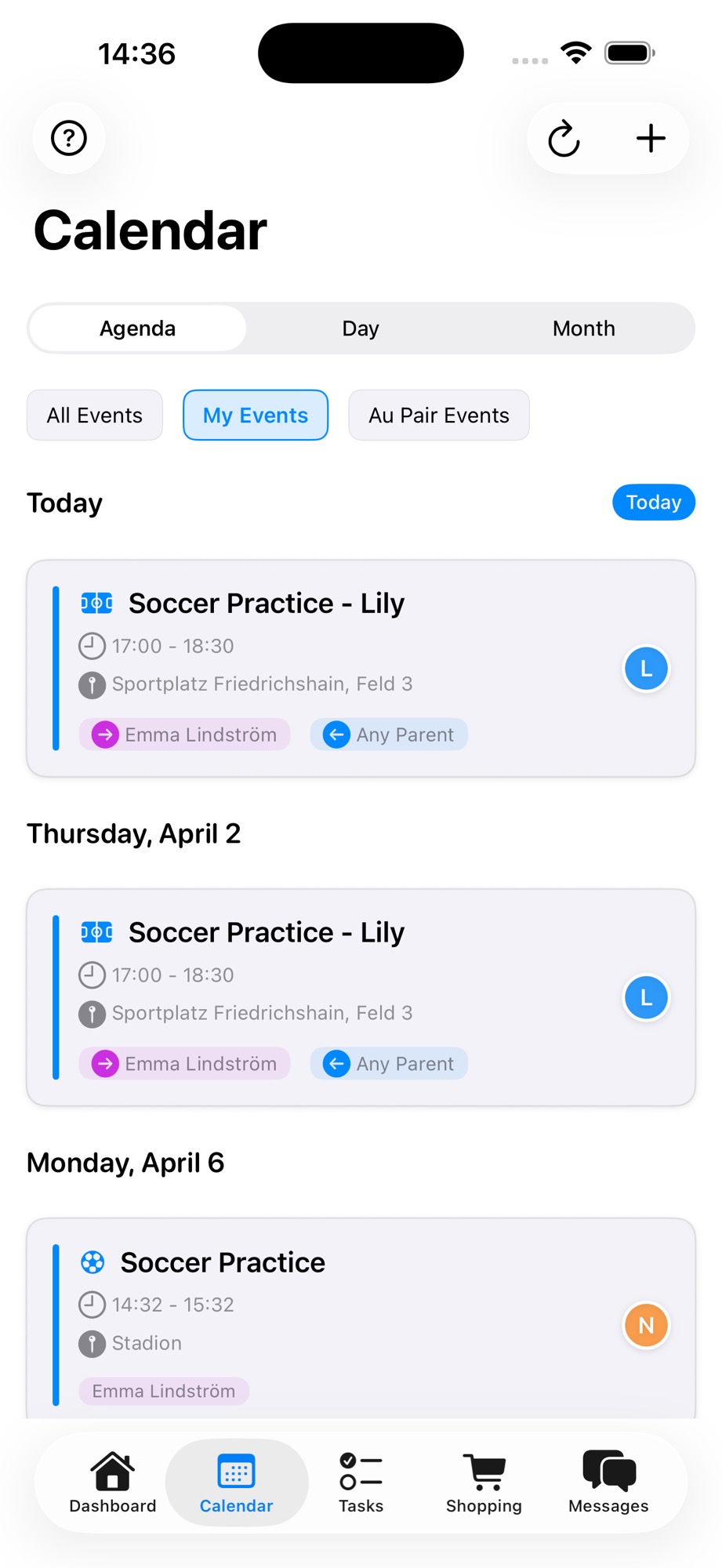
Use the check-in to compare actual hours against the agreed schedule — a printed weekly template on the fridge makes this easy. If you track hours in an app like AuPairSync, pull up the data together. Numbers remove emotion from the conversation. "The app shows 33 hours this week — that's three over our agreement. Let's figure out where the extra time crept in" is a conversation. "I feel like I'm working too much" is a conflict.
The Kids
Your au pair spends more waking hours with your children than you do during the week. They notice things you might miss — a change in behavior, a struggle at school, a friendship problem. The weekly check-in is the place to share these observations.
Ask specific questions:
- "How was drop-off this week?" — reveals separation anxiety or social issues
- "Any homework battles?" — reveals learning struggles
- "How's the bedtime routine going?" — reveals whether the routine needs adjusting
- "Did anything surprise you about the kids this week?" — an open question that often surfaces gold
Wellbeing
Your au pair is a young person living far from home. Loneliness, culture shock, and homesickness are not edge cases — they're the norm, especially in the first three months. But most au pairs won't volunteer this information unless you create space for it.
You don't need to be a therapist. Just ask: "How are you feeling this week — not about work, just generally?" Then listen. If they're struggling, small practical gestures often help more than emotional conversations: introducing them to another au pair in the area, helping them find a sports club, or simply going for a walk together.
Household Friction
The small stuff — dishes, noise, bathroom schedules, food that disappeared from the fridge — rarely gets raised in real time because it feels petty. But petty things compound. The check-in gives these micro-irritations a dignified exit route.
A good prompt: "Are there any little things about the house or the routine that are bugging you? Nothing's too small." You might be surprised what comes up. And you might realize you've been silently annoyed about something too.
| Common friction points | Why it festers | How to address it |
|---|---|---|
| Kitchen cleanliness | Neither side wants to seem petty | Agree on a "reset state" the kitchen should be in after each use |
| Noise after 22:00 | Au pair doesn't realize walls are thin | Be direct but kind — "the kids' rooms are right above the living room" |
| Shared bathroom timing | Awkward to discuss | Set a simple morning order: kids first, au pair, then parents |
| Food boundaries | Au pair unsure what's shared | Designate shelves; revisit monthly |
| Laundry machine access | Schedules clash silently | Pick two designated au pair laundry days |
What to Do When Something's Actually Wrong
Most weeks, the check-in is easy. A few wins, a minor adjustment, next week's schedule, done. But occasionally you'll hit something real — a pattern of lateness, a safety concern, or an au pair who's clearly unhappy.
Addressing Performance Issues
The weekly check-in is the right place for this, but the approach matters. Three rules:
- Be specific, not general. "On Monday and Wednesday, the kids weren't picked up until 15:45 even though school finishes at 15:15" — not "you're always late."
- Ask before you tell. "What happened with the pickup times?" The answer might surprise you — maybe there's road construction, maybe the after-school program changed its release time, maybe the au pair's phone died and they couldn't check the schedule.
- Agree on a fix together. "Let's set a phone alarm for 14:50 as a reminder" feels collaborative. "Don't be late again" feels punitive.
If the same issue comes up three weeks in a row despite agreed fixes, it's time for a more serious conversation — but you'll have documentation from your check-ins showing that you raised it, discussed it, and gave it time to improve. That matters if the situation escalates.
When Your Au Pair Is Struggling
Sometimes the check-in reveals that your au pair is having a genuinely hard time. Homesickness. Loneliness. Feeling overwhelmed by the kids. Missing their family back home.
Resist the urge to fix it immediately. Listen first. Acknowledge the feeling. "That sounds really tough. I'm glad you told me." Then, together, identify one small concrete step for the coming week. Not "let's solve your homesickness" but "let's find an au pair meetup in the area for Saturday" or "would it help to video-call your family during the Tuesday lunch break?"
Check back the following week. "How did the meetup go?" Continuity is what makes the check-in powerful — it's not a one-off conversation, it's an ongoing thread.
Key takeaway: The check-in isn't just about logistics. It's your early warning system for burnout, homesickness, and relationship breakdown — problems that are easy to fix early and catastrophic when ignored.
Making It Stick: Practical Tips
The hardest part of the weekly check-in isn't knowing what to discuss — it's actually doing it consistently. Here's what experienced host families recommend.
Put It in the Calendar
If it's not scheduled, it won't happen. Block a recurring slot in your shared calendar. Treat it like a doctor's appointment — movable in emergencies, but not skippable. If you use AuPairSync for your family schedule, add it as a recurring event so everyone can see it.
Keep Brief Notes
You don't need meeting minutes. But jotting down two or three bullet points after each check-in — what was discussed, what was agreed, any follow-ups — creates a lightweight record that's invaluable if the same issue resurfaces weeks later.
A simple format works:
- Date: 2026-04-14
- Wins: Camila handled both kids solo during Leo's dentist appointment
- Discussed: Morning routine running 15 min late — agreed to set 6:45 alarm
- Next week: School holiday Monday, adjusted schedule shared
- Follow-up: Help Camila find a yoga class (she mentioned wanting one)
Let the Au Pair Set Agenda Items Too
The check-in shouldn't feel like a one-way performance review. Encourage your au pair to bring topics. Some families keep a shared note — in an app, on a whiteboard, or even a scrap of paper on the fridge — where either side can jot down things to discuss during the week. That way, nothing gets forgotten and nothing festers.
Don't Cancel Three Weeks Running
Life gets busy. Kids get sick. You're traveling. It's tempting to skip the check-in when everything seems fine. But "everything seems fine" is often "nobody's said anything yet." If you absolutely can't meet in person, do a shortened version over a voice message or a quick text exchange. The point is consistency, not perfection.
Adjust the Format Over Time
In the first month, check-ins might take the full 30 minutes as you and your au pair are still calibrating. By month four, they might shrink to 15 minutes because you've built trust and resolved the big stuff. That's fine. Let the format evolve. Some families switch to biweekly after six months. Others keep the weekly rhythm all year because they value the connection.
What If Your Au Pair Is Reluctant?
Some au pairs — especially those from cultures where direct feedback is uncommon — may feel uncomfortable with the check-in format at first. They might give one-word answers. They might say "everything's fine" when it clearly isn't. That's normal.
Building Trust Takes Time
Don't force depth. In the early weeks, keep it light. Share your own observations first. Be vulnerable: "I think I wasn't clear enough about the bedtime routine — that's on me, not you." When the au pair sees that you're willing to take feedback, they'll gradually open up.
Ask Specific Questions
"How's everything going?" is almost guaranteed to produce "fine." Better questions:
- "What was the hardest moment of the week?"
- "Is there anything about the schedule that doesn't work for you?"
- "Did anything confuse you this week?"
- "If you could change one thing about the routine, what would it be?"
Specific questions require specific answers. They also show that you're genuinely interested, not just going through the motions.
Use the Au Pair's Language If Possible
If your au pair speaks limited English or German, the check-in is harder but more important. Consider using a translation app for complex topics. Or let them write down their thoughts in their own language beforehand and translate together. The goal is understanding, not linguistic perfection.
Key takeaway: Reluctant au pairs don't need more pressure — they need more safety. Lead by example, ask specific questions, and give it time.
The Ripple Effects You Don't Expect
Families who commit to weekly check-ins consistently report benefits they didn't anticipate:
- Fewer explosive arguments. When small issues get a weekly outlet, they never build up enough pressure to explode.
- Better au pair retention. Au pairs who feel heard are dramatically less likely to request a rematch. The check-in tells them: you matter to us beyond the work you do.
- Stronger childcare. When your au pair knows they can ask "am I handling Leo's tantrums the right way?" without judgment, they ask — and the quality of care improves.
- A real relationship. The check-in often evolves into the highlight of the week. Coffee, cake, genuine conversation. Many families stay in touch with their au pairs for years — and the weekly check-in is where that bond was built.
The check-in also protects you. If a situation deteriorates and you need to involve your agency, having a record of weekly conversations showing that you raised concerns early, gave feedback constructively, and offered support will matter. It's not about building a legal case — it's about demonstrating good faith.
Your Check-In Cheat Sheet
Here's everything you need to get started this week:
- Pick a time: Sunday evening or Monday morning,
20–30 minutes - Pick a place: Kitchen table, café, a walk — anywhere private and relaxed
- Use the four-part structure: Wins → Issues → Schedule → Open
- Keep brief notes: 3–5 bullet points after each session
- Let your au pair contribute: Shared note for agenda items during the week
- Ask specific questions: Not "how's everything?" but "what was the hardest moment?"
- Follow up: Reference last week's discussions. Continuity builds trust.
- Be consistent: Weekly for the first three months minimum, then adjust
The families who struggle most with au pairs aren't the ones who pick the wrong candidate, write bad house rules, or create a flawed first-week plan. They're the ones who assume that silence means satisfaction. It doesn't. Silence means nobody created a space to speak.
Thirty minutes a week. That's all it takes to transform your au pair year from a series of unpleasant surprises into a relationship built on trust, clarity, and mutual respect. The only question is: when's your first check-in?
Organizing your au pair year? Download AuPairSync to keep your schedule, tasks, and family communication in one place from day one.