
Three months into what was supposed to be a wonderful year, the Brennan family sat in their living room after the kids were asleep, having the conversation neither of them wanted to have. Their au pair, Marta from Poland, was a lovely person. Kind, funny, great with languages. But she was consistently late for her morning shift, had twice forgotten to pick up their youngest from daycare, and last week had left the six-year-old unsupervised in the bath while she took a phone call.
They'd talked to Marta about it. Twice. She'd apologized both times, seemed genuinely sorry, and then the same patterns repeated within days. The kids liked her. She wasn't malicious. But the trust that childcare demands — the kind where you leave your house in the morning knowing your children are safe — was eroding week by week.
"Do we ask her to leave?" Sarah Brennan asked her husband. "She hasn't done anything terrible. But I spend half my workday worrying."
The Brennans were facing what the au pair world calls a rematch — the process of ending an au pair placement early and, in many cases, finding a new match for one or both sides. It's one of the most emotionally difficult experiences in the au pair journey, for families and au pairs alike. And it's far more common than most people expect.
How Common Is Rematch, Really?
Nobody publishes exact statistics, but experienced au pair agencies estimate that between 15% and 25% of placements end in rematch. Some agencies report even higher numbers for first-time host families. This isn't a rare, catastrophic failure — it's a recognized part of the au pair system, with established processes to handle it.
Understanding this matters because many families spend weeks or months agonizing over whether they're "allowed" to end a placement, whether they're being unreasonable, or whether rematching will somehow brand them as a difficult family. The answer to all three is usually no.
Key takeaway: Rematch is not a failure. It's a structured process designed to protect both families and au pairs when a placement isn't working. Between 1 in 4 and 1 in 6 placements go through it.
The Warning Signs: When Small Issues Become Big Problems
Not every rough patch is a rematch situation. The first few weeks are always bumpy. Culture shock, jet lag, homesickness, and the sheer learning curve of a new household mean that early friction is normal and expected. The question isn't whether there are problems — it's whether the problems are getting better or getting worse.
Signs that things can be worked out
- Adjustment struggles in the first 4–6 weeks — your au pair is trying but still learning your routines
- Cultural misunderstandings — they did something that makes perfect sense in their home culture but doesn't fit yours
- Skill gaps that are improving — they weren't great at cooking for kids initially but are getting better with guidance
- Communication hiccups — language barriers causing occasional confusion, but effort is visible
- Homesickness affecting mood — they seem sad or withdrawn but are still reliable and engaged with the children
These are growing pains. They deserve patience, clear communication, and structured support — like a weekly check-in — not a rematch conversation.
Signs that point toward rematch
- Repeated safety lapses — leaving children unsupervised, forgetting pickups, ignoring allergy protocols
- Chronic unreliability — consistently late, frequently calling in sick, not following the agreed schedule
- Dishonesty — lying about where they were, what happened with the kids, or how they spent working hours
- Refusal to follow reasonable rules — not one-time mistakes, but a pattern of ignoring house rules after multiple conversations
- Fundamental personality mismatch — the au pair is deeply unhappy, withdrawn, and has no connection with the children despite genuine attempts from both sides
- Substance issues — drinking during working hours, or behavior that suggests impaired judgment around the children
Important distinction: A single incident (unless it's a serious safety breach) rarely justifies immediate rematch. What matters is the pattern. Has the issue been discussed? Has the au pair had a genuine opportunity to change? Has enough time passed to see if improvement is real?
Before You Rematch: The Repair Conversation
If you're considering rematch, you owe it to everyone involved — your family, your au pair, and your children — to attempt a genuine repair first. Not a vague "things need to improve" chat, but a structured conversation with specific outcomes.
How to structure the conversation
1. Name the specific issues. Don't speak in generalities. "We need to talk about three things: the morning schedule, the bath-time supervision rule, and the daycare pickup" is clear. "We're not happy with how things are going" gives your au pair nothing to work with.
2. Explain the impact. "When you're 15 minutes late in the morning, I'm late for work and I've received a warning from my manager" makes the consequences real. "Being on time is important" is abstract.
3. Listen to their side. There may be context you're missing. Maybe the bus schedule changed. Maybe they're struggling with something they haven't told you about. Maybe they misunderstood a rule because of a language barrier. Listening doesn't mean accepting excuses — it means understanding the full picture.
4. Agree on specific changes with a timeline. "For the next two weeks, I need you to be in the kitchen by 7:15 AM every weekday. Can we agree on that?" A clear, measurable commitment that both sides can track.
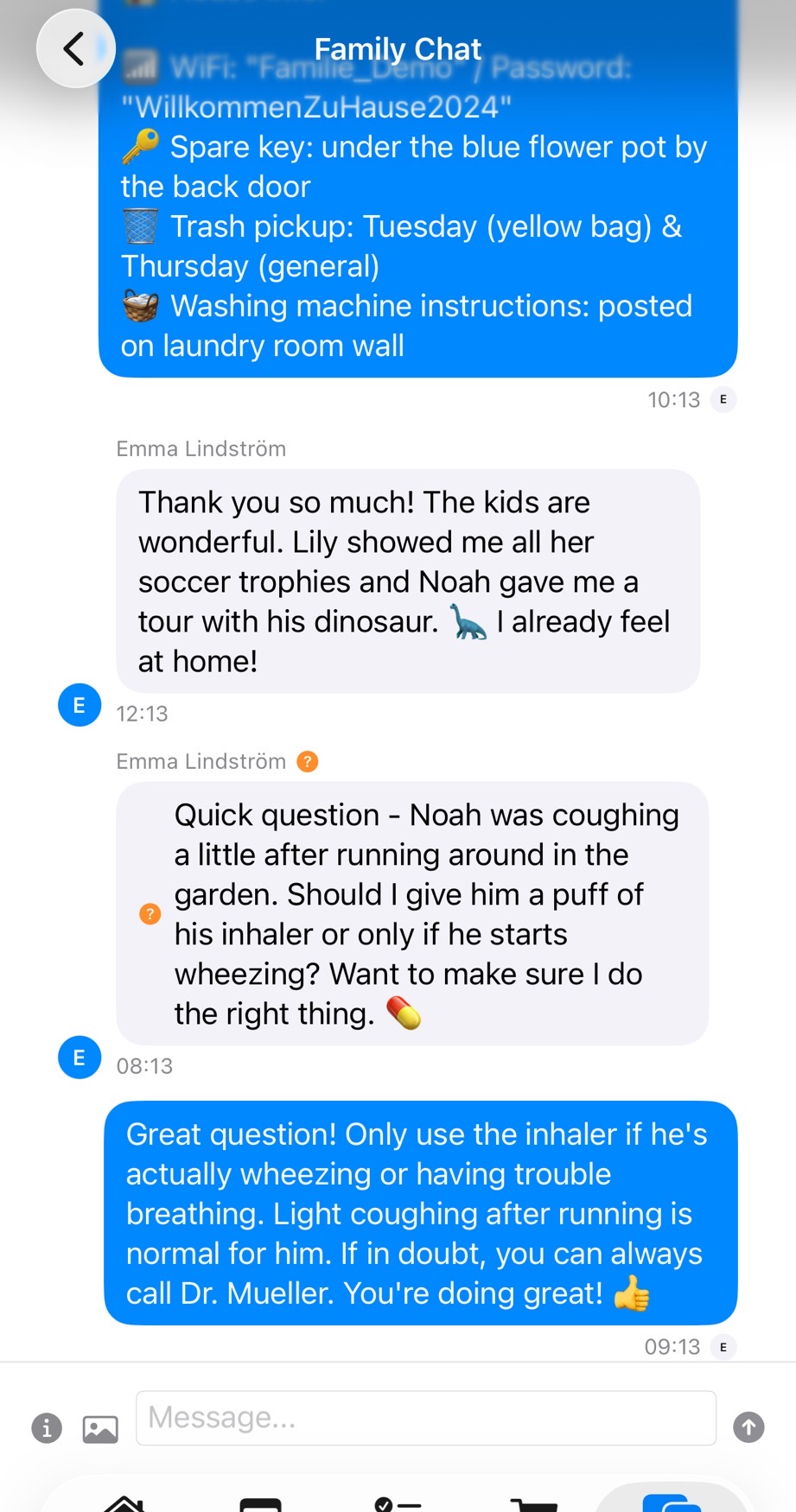
5. Write it down. After the conversation, send a brief summary of what was agreed. This isn't about building a legal case — it's about making sure both sides remember the same conversation. A shared note in AuPairSync's messaging feature keeps everything in one place and avoids the "I thought you said..." problem.
6. Set a review date. "Let's check in again in two weeks and see how things are going." This gives your au pair a clear window to demonstrate change, and gives you a defined point to evaluate honestly.
Give the repair a genuine chance
Two weeks is a reasonable trial period for behavioral issues. Expecting instant, permanent change overnight is unrealistic — people need time to build new habits. But you should see clear, consistent effort from the start. If after the review period the same issues persist, you've done your due diligence and can move forward with a clear conscience.
Making the Rematch Decision
You've had the repair conversation. You've given it time. Things haven't changed — or they changed briefly and then slid back. Now what?
Questions to ask yourself
- Is this a safety issue? If yes, the timeline accelerates. No amount of "giving it another chance" justifies putting your children at risk.
- Have I been clear about my expectations? Sometimes families think they've communicated clearly but haven't. Review your conversations honestly.
- Is my au pair trying? There's a difference between someone who's struggling despite genuine effort and someone who simply doesn't care. The first deserves more patience. The second won't change.
- Would more time help? If the issue is a learning curve (cooking skills, language fluency, navigating public transport), time and support might genuinely solve it. If the issue is character or reliability, more time usually just means more of the same.
- What's the impact on my children? This is the question that matters most. If your children are anxious, if they don't trust their au pair, or if you're compensating for your au pair's shortcomings to the point where the arrangement has no practical benefit — it's time.
Key takeaway: The decision to rematch is rarely about one dramatic event. It's usually the accumulation of unresolved issues over weeks or months. Trust your judgment. If you've genuinely tried to make it work and it hasn't, that's your answer.
How the Rematch Process Works
The mechanics of rematch depend on whether you used an agency or arranged your au pair privately.
Agency-facilitated rematch
If you went through an au pair agency, they have a formal rematch process:
1. Notify your agency. Call your local coordinator or agency contact and explain the situation. Be specific and factual — describe behaviors, not character judgments. "She was late five times in two weeks" is useful. "She's irresponsible" is not.
2. The agency investigates. Most agencies will speak separately with both the host family and the au pair to understand both perspectives. They may suggest mediation or additional support before agreeing to a rematch.
3. The two-week transition. In most agency programs, once rematch is initiated, the au pair has two weeks to find a new host family through the agency's pool. During this period, some agencies arrange temporary housing; others expect the au pair to remain with the current family.
| Phase | What happens | Timeline |
|---|---|---|
| Notification | Family contacts agency coordinator | Day 1 |
| Investigation | Agency speaks to both sides separately | Days 1–3 |
| Decision | Agency approves rematch or suggests mediation | Days 3–5 |
| Transition | Au pair searches for new family via agency pool | Days 5–19 |
| Completion | Au pair moves to new family or returns home | By day 14–21 |
4. The au pair searches for a new family. The agency helps the au pair find a new match. Many au pairs do rematch successfully and go on to have a great experience with their second family. The agency has an incentive to make this work — a successful rematch is better for everyone than an au pair flying home.
5. Your family can also re-enter the pool. If you want to try again with a different au pair, the agency will help you match. Many families report that their second match was excellent — because by then, both the family and the agency had a much clearer picture of what works.
Private arrangement rematch
If you arranged your au pair independently (without an agency), the process is more informal but requires more care:
- Have an honest conversation. Explain that the arrangement isn't working and that you'd like to end it amicably. Give a reasonable notice period — two weeks is standard.
- Help with the transition. Your au pair may be far from home with limited resources. Help them find temporary accommodation, connect them with local au pair communities, or assist with rebooking flights if they decide to go home.
- Handle the legal side. If your au pair is on a visa tied to your family's address, ending the arrangement has immigration implications. In Germany, the au pair must find a new host family and update their residence permit within a limited window, or leave the country. Consult your local Foreigners' Authority (Ausländerbehörde) for specifics.
- Document the end of the arrangement. A brief written confirmation that both sides agreed to end the arrangement, signed by both parties, protects everyone.
Telling Your Children
This is the part that keeps parents up at night. Your children may be attached to the au pair, and explaining why they're leaving is genuinely difficult.
Age-appropriate honesty
-
Toddlers and preschoolers (under 5): Keep it simple. "Marta is going to live with a different family now. It's not because of anything you did. A new au pair is going to come soon, and they'll be excited to meet you." Young children process through routine, not explanation — they'll adjust faster than you expect.
-
School-age children (5–10): They'll want to know why. Be honest without blaming. "Sometimes people live together and realize they work better with someone else. Like how sometimes friends at school need a break from each other. Marta is a nice person, and we wish her well, but our family needs someone who's a better fit for us."
-
Pre-teens and teenagers (11+): They'll likely have their own observations. You can be more direct: "We've been having some challenges with the arrangement, and after trying to work it out, we've decided it's best for everyone to make a change." Don't badmouth the au pair — your children will remember how you handled this.
What all ages need to hear
- This is not their fault
- They are allowed to feel sad about it
- They can stay in touch with the au pair if both sides want that
- A new au pair will come, and it's okay to be excited about that
After Rematch: Rebuilding and Trying Again
For host families
If you decide to find a new au pair, use the experience to improve your next match:
- Revisit your expectations. Were they realistic? Did you clearly communicate your house rules and daily schedule before your au pair arrived?
- Update your family profile. Be more specific about what you need. If morning reliability is critical, say so. If you need someone comfortable with driving, make that non-negotiable rather than "preferred."
- Ask better interview questions. Your matching process should probe for the specific qualities that were missing in your first match. Reference-check more thoroughly.
- Improve your onboarding. The first week sets the tone. Were your systems clear enough? Did your au pair have everything they needed to succeed?
For au pairs
If you're an au pair going through rematch, know that this is not the end of your au pair experience — it's a redirect:
- Most agencies actively help rematching au pairs find new families
- Many au pairs report that their second family was a much better fit
- The experience, painful as it is, teaches you what to look for (and what to avoid) in a host family
- Your visa status may allow time to find a new match — check with your agency or the local authorities
How to Prevent Rematch in the First Place
Prevention isn't always possible — sometimes the chemistry simply isn't right. But the most common rematch triggers are preventable with better preparation:
- Set clear expectations before arrival. Share your house rules, daily schedule, and childcare expectations in writing before your au pair's first day. Use a shared platform like AuPairSync so nothing gets lost in translation.
- Schedule weekly check-ins. A 30-minute weekly conversation catches problems when they're still small. Don't wait until frustration builds.
- Address issues immediately. The Brennan family waited weeks before having a serious conversation. By then, patterns were entrenched and trust was damaged. Early, kind correction prevents late, angry confrontation.
- Manage the adjustment period. The first 4–6 weeks are always hard. Lower your expectations during this window, provide extra support, and remember that your au pair has just moved to a new country.
- Stay in regular communication. Many rematch situations could have been avoided if both sides had simply talked more. A quick daily message — "how was your day?" or "just checking in" — keeps the relationship warm and surfaces concerns before they become crises.
Key takeaway: Most rematches happen not because the wrong person was chosen, but because the right conversations weren't had early enough. Clear expectations, regular communication, and early intervention prevent the majority of placement breakdowns.
When It's the Right Call
Deciding to rematch is hard. Living with a failing placement is harder. If you've reached the point where you dread Monday mornings, where you're compensating for your au pair's shortcomings, where your children aren't getting the care they deserve — making a change isn't giving up. It's taking responsibility.
The au pair program exists to benefit both sides. When it stops doing that — despite genuine effort from everyone involved — ending the arrangement and trying again is exactly what the system is designed for.
The Brennan family rematched in March. Their second au pair, Elena from Spain, arrived three weeks later. The Brennans did things differently this time: clearer rules, a structured first week, daily check-ins for the first month. Two months in, Sarah Brennan no longer spent her mornings worrying. She spent them working — knowing her children were in good hands.
Ready to keep your au pair communication organized from day one? Download AuPairSync — it's free.